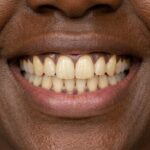
A smile makeover sounds like a single procedure, yet it almost never is. The phrase describes a plan rather than one treatment. When someone asks about a smile makeover in Nairobi, they are usually picturing the finished result, a smile that looks brighter, more even and better balanced, without knowing which steps get them there. The work behind that result is a combination of smaller procedures, each doing one job, arranged in a sensible order.
That idea is worth holding onto from the start. A makeover is not a bigger version of whitening, and it is not a longer course of braces. It is the coordination of several cosmetic treatments so they support each other instead of pulling in different directions. Understanding how those pieces fit together makes the whole process easier to follow, and it helps you ask better questions when you sit down with a dentist.
What a smile makeover actually involves
A good makeover starts by looking at the smile as a whole rather than tooth by tooth. Three things are assessed together. The first is the teeth themselves, their colour, shape, size and how straight they sit. The second is the gums, which frame the teeth and set the line your smile follows. The third is the way the teeth and gums relate to your lips and face when you talk and when you smile widely.
Because these three parts affect one another, a change to one often calls for a small change to another. Whitening the teeth, for example, can make an uneven gum line more noticeable. Straightening crowded teeth can change how much gum shows. Looking at everything at once is what separates a planned makeover from a set of unrelated treatments, and it is the reason two people who both want a nicer smile can end up with very different plans.
Planning comes before any bleaching or reshaping
The most useful part of a makeover happens before any treatment begins. Modern practice leans heavily on planning tools that let you preview the outcome first. Digital smile design uses photographs and scans to model the finished smile on screen, and a trial mock-up can be placed over your own teeth so you see the shape and proportion before anything is made permanent.
This step matters for more than reassurance. A systematic review of digital smile design found that planning the result in advance consistently improved patient satisfaction, communication between patient and dentist, and the sense that the outcome was predictable, with several studies also reporting better confidence afterwards.¹ In other words, seeing the plan first tends to lead to a result you are happier with, because expectations are agreed early rather than discovered at the end.
Planning also decides the order of treatment, which turns out to be one of the most important choices in the whole process. We will come back to sequencing shortly.
The building blocks of a smile makeover
Most makeovers are built from a short list of treatments. Rarely are all of them needed. The skill lies in choosing the fewest that will achieve the look you want, then combining them well.
Whitening: usually where a makeover starts
Whitening is often the first step, and there is a practical reason for that. Fillings, bonding and veneers do not change colour once they are placed, so the shade of your natural teeth is set before any of that work begins. Whitening first gives a clean baseline, and any new restorations are then matched to the lighter shade rather than to the darker starting point.
Whitening lifts the colour of natural enamel using a peroxide gel, either in a custom tray at home or in the surgery. The most common side effect is short-lived sensitivity, and stronger is not automatically better. A network meta-analysis comparing different gel strengths found that a lower-concentration gel could achieve comparable whitening with less sensitivity, which is one of the reasons professional guidance is worth having rather than reaching for the strongest product available.⁵ You can read more in our guide to teeth whitening, which compares professional and at-home options in detail.
Bonding and veneers: reshaping chips, gaps and worn edges
Once colour is sorted, shape is the next thing most makeovers address. Two treatments do most of this work, and they are worth understanding side by side.
Composite bonding uses a tooth-coloured resin that is shaped directly onto the tooth and set hard, usually in a single visit. It is additive, which means it builds onto the tooth and often needs little or no drilling. That makes it a conservative way to repair a chip, close a small gap or rebuild a worn edge. Our articles on repairing a chipped front tooth and closing a gap in the front teeth cover these situations closely.
Veneers are thin shells, usually ceramic, bonded over the front of the teeth to change their colour and shape at the same time. They tend to hold their appearance for a long time. Well-conducted reviews report ceramic veneers surviving in around nine of ten cases or better over roughly a decade, depending on the material used.³ How the veneer is attached matters as much as the material. Research shows veneers bonded to natural enamel last longer and fail less often than those bonded to exposed dentine or over old fillings, which is a strong argument for removing as little tooth as possible.⁴
That preference for keeping tooth structure is now the mainstream view. A review comparing conventional veneers with minimal-preparation designs found the more conservative approaches performed well, with good survival and patient satisfaction.² The practical takeaway is that bonding and veneers are not rivals so much as points on a scale, from the most conservative repair to a fuller resurfacing, and a makeover often uses both on different teeth.
Straightening: braces and clear aligners
Sometimes the teeth need moving before anything is placed on them. Straightening crowded or tilted teeth first can reduce how much reshaping is needed afterwards, and in some cases it removes the need for veneers altogether. Alignment is therefore not a separate track from cosmetic work, it is part of the same plan.
Both fixed braces and clear aligners can do this. Adults often lean towards aligners for appearance and comfort, and a systematic review of quality of life during treatment found aligners compared favourably with fixed braces on several of the day-to-day measures patients care about.⁶ If straightening is likely to be part of your makeover, our article on adult braces explains what to expect and why it is rarely too late to start.
Gum reshaping: the frame around the teeth
The gums are easy to overlook, yet they set the line your smile follows. Uneven gum heights or a smile that shows a lot of gum can make otherwise good teeth look out of proportion. Gentle reshaping of the gum line, done as part of the plan, can even out that frame so the teeth read as balanced. Because the gums frame everything else, they are assessed alongside the teeth from the very first appointment rather than treated as an afterthought.
The order things happen in
Sequencing is where a makeover succeeds or struggles, and the logic is straightforward once you see it.
Health comes first. Any decay, gum inflammation or loose fillings are dealt with before cosmetic work begins, because a beautiful result built on an unhealthy foundation will not last. After that, alignment usually comes next, since moving teeth into better positions changes what the later steps need to do. Whitening then follows, so the final colour is fixed before anything permanent is matched to it. Bonding and veneers come after whitening for the same reason. A final review checks that the teeth, gums and lips work together, with any small adjustments made at the end.
This order is not rigid, and a simpler makeover may skip several steps. The point is that the sequence is chosen deliberately, not left to chance, so each treatment sets up the next rather than undoing it.
Keeping your own teeth: the less-is-more principle
A theme runs through everything above, which is doing the least that will achieve the result. Older approaches often reduced healthy teeth heavily to make room for restorations. Current thinking favours additive treatments first, keeping natural enamel wherever possible, and only reducing tooth structure when there is a clear reason.
The evidence supports this. Conservative veneer designs perform well,² and veneers that stay bonded to enamel outlast those placed over drilled-down dentine or old fillings.⁴ For you, that means a good makeover should feel proportionate. If a chip can be repaired with bonding, it does not need a veneer. If whitening and minor reshaping will do, larger work can wait. Preserving your own teeth is not a compromise on appearance, it is what tends to keep the result looking natural and lasting longer.
Making the results last
A makeover is worth protecting. Day-to-day care is much the same as for natural teeth, with regular brushing, cleaning between the teeth and routine check-ups. If you grind your teeth at night, a thin guard protects both natural edges and any bonding or veneers. Whitening can be topped up occasionally to keep the shade you started with, and well-made ceramic restorations should give you many years of service when they are looked after.³
If you have been thinking about a smile makeover in Nairobi, the sensible next step is a proper assessment so the plan is built around your teeth rather than a template. The team at DentMind CBD Dental Centre on Kimathi Street can look at your smile as a whole, show you the likely outcome before anything begins, and talk you through the fewest steps that will get you there. You can book online through the DentMind booking page, message the clinic on WhatsApp, or read more across the site at dentmindcbd.co.ke. For a trusted independent overview of cosmetic options, the American Dental Association’s whitening resource is a reliable starting point.
REFERENCES
¹ Alwabel, L. K., Alabduljabar, W. M., Alawfi, L. K., Al Johani, N. K., Alharbi, L. E., Kharif, M. A., Albahrani, F. D., Alarjani, M. B., Alzahrani, M. S., Alshammari, A. A., Alashjai, A., & Alanaz, L. (2025). Digital smile design and patient-centered outcomes in esthetic restorative dentistry: A systematic review. Cureus, 17(11), e98084. https://doi.org/10.7759/cureus.98084
² Meer Rownaq Ali, A. B. (2023). Conventional versus minimally invasive veneers: A systematic review. Cureus, 15(9), e44638. https://doi.org/10.7759/cureus.44638
³ Klein, et al. (2025). Survival and complication rates of feldspathic, leucite-reinforced, lithium disilicate and zirconia ceramic laminate veneers: A systematic review and meta-analysis. Journal of Esthetic and Restorative Dentistry. Advance online publication. https://doi.org/10.1111/jerd.13351
⁴ Alqutaibi, A. Y., Saker, S., Alghauli, M. A., Algabri, R. S., & AbdElaziz, M. (2024). Clinical survival and complication rate of ceramic veneers bonded to different substrates: A systematic review and meta-analysis. Journal of Prosthetic Dentistry. Advance online publication. PMID: 38604905. https://pubmed.ncbi.nlm.nih.gov/38604905/
⁵ Cordeiro, D. C. F., Ñaupari-Villasante, R., Condolo, L. C., Terra, R. M. O., Favoreto, M. W., de Geus, J. L., Chibinski, A. C., & Reis, A. (2025). What is the optimal concentration of carbamide peroxide for at-home bleaching? A systematic review and network meta-analysis. Japanese Dental Science Review, 61, 250–263. https://doi.org/10.1016/j.jdsr.2025.10.001
⁶ Kaklamanos, E. G., Makrygiannakis, M. A., & Athanasiou, A. E. (2023). Oral health-related quality of life throughout treatment with clear aligners in comparison to conventional metal fixed orthodontic appliances: A systematic review. International Journal of Environmental Research and Public Health, 20(4), 3537. https://doi.org/10.3390/ijerph20043537