
If your gums bleed when you brush, you have probably wondered whether you can reverse gum disease before it gets serious. The honest answer is that it depends on how far the disease has gone. Caught early, gum disease can be turned around completely. Left too long, the damage becomes permanent, although it can still be stopped from getting worse. This guide explains the difference, in plain language, so you know what to do next.
First, What Is Gum Disease?
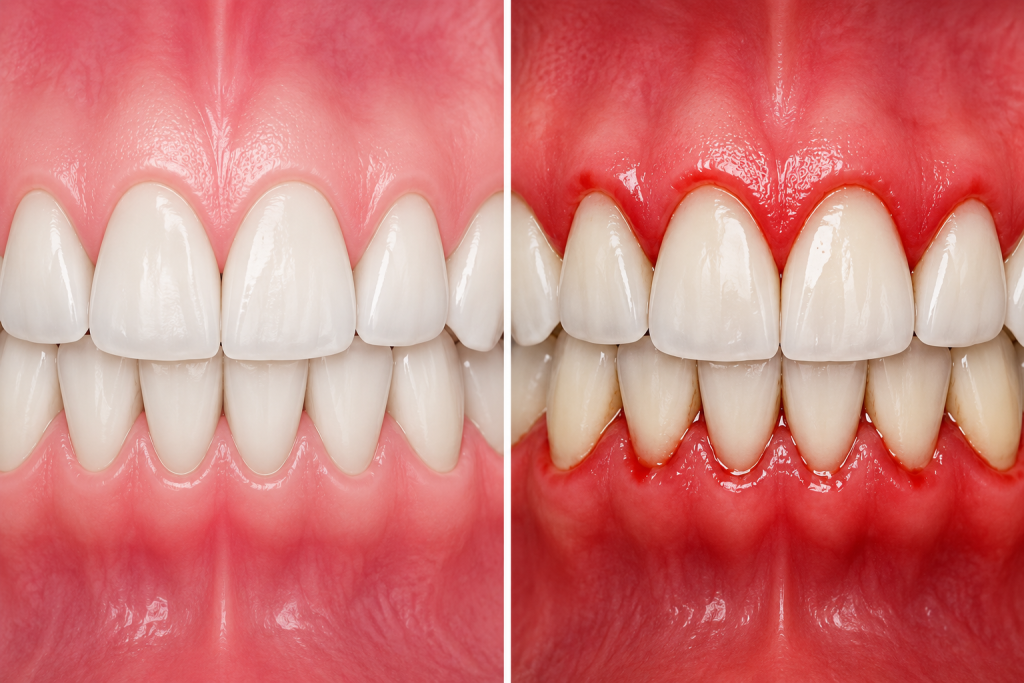
Gum disease begins with dental plaque, a film of bacteria that builds up along the gumline. When plaque is not removed, the body responds with inflammation, and the gums become red, swollen, and prone to bleeding.¹ This early, mild stage is called gingivitis.
If gingivitis is ignored, it can advance into periodontitis, a deeper problem that affects the bone and tissues holding your teeth in place.¹ For a fuller breakdown of the stages and symptoms, see our guide on what gum disease is. For now, the key point is simple. Where you sit on that path decides whether the condition can be reversed.
Can You Reverse Gum Disease in Its Early Stage?
Yes. At the gingivitis stage, the inflammation is driven by the bacterial film on your teeth, and it settles once that film is removed and kept under control.¹ The bone and the fibres anchoring your teeth have not yet been damaged, so the gums can return to full health.
Two things work together to reverse gum disease this early. The first is consistent home care, meaning brushing twice a day and cleaning between your teeth.² The second is a professional cleaning to remove the hardened plaque, called tartar, that a toothbrush cannot shift.²
Once the plaque and tartar are gone and good habits are in place, the inflammation usually subsides and the gums recover. This is the window where the problem is fully fixable, which is exactly why early action matters so much.
What Happens When Gum Disease Becomes Periodontitis?
This is the turning point. As gingivitis progresses, the gums begin to pull away from the teeth and form pockets where bacteria collect, and the bone supporting the teeth starts to break down.¹
A dentist can detect this during a check-up by measuring the depth of those pockets, since deeper pockets point to a loss of support around the tooth. Once the disease has destroyed the bone and the fibres that hold a tooth in its socket, that lost support does not grow back on its own.¹
So the difficult truth is this. You cannot regrow lost bone simply by brushing better, and receding gums in particular do not climb back up by themselves, which is something many patients worry about once they notice it.³
If It Cannot Be Reversed, Can It Be Controlled?
Yes, and this is the reassuring part. While advanced gum disease cannot be undone, modern periodontal treatment can stop it in its tracks and keep it from destroying more tissue.²
With the right treatment and ongoing maintenance, you can keep the teeth you have, calm the infection, and protect yourself from the slow slide towards tooth loss. The goal shifts from cure to control, and that control can last for years when you stay on top of it.²
In other words, even if you have missed the window to fully reverse gum disease, you have not missed the chance to save your smile.
Treatments That Stop Gum Disease From Getting Worse
Treatment depends on the stage, and dentists almost always start with the least invasive option.
The first line of defence is non-surgical. The main procedure is a deep clean of the tooth surfaces below the gumline, which removes the bacterial film and tartar that drive the disease and allows the gums to heal and tighten.² This may be supported by antimicrobial rinses or gels, along with tailored guidance on how to brush and clean between your teeth at home.²
When the disease is advanced and cleaning alone is not enough, surgical options come into play. These include procedures to reduce deep pockets and, in selected cases, regenerative techniques that aim to rebuild some of the lost bone and tissue.² Your dentist will only suggest these when they are genuinely needed.
Whatever the stage, treatment does not end with one visit. Regular supportive care, sometimes called periodontal maintenance, is what keeps the disease under control over the long term.²

Signs You Should Not Ignore
The earlier gum disease is caught, the more of it you can reverse, so knowing the warning signs is worth your time. Watch for:
- Gums that bleed when you brush or floss
- Red, swollen, or tender gums
- Persistent bad breath or a bad taste
- Gums that are pulling away from the teeth
- Loose teeth or a change in how your teeth fit together
Bleeding is often the first thing people notice, and many quietly hope it will pass.³ Treating it as an early alarm, rather than a small annoyance, is what keeps a reversible problem from becoming a permanent one.¹
Why Reversing or Controlling Gum Disease Matters
Gum disease is not only about your mouth. Left to advance, it affects how you eat, speak, and feel in front of others, and patients often describe real worry about losing teeth and about damage they fear cannot be undone.³
There is a whole-body angle too. Periodontal disease drives inflammation that does not stay confined to the gums, and it has been linked to conditions including heart disease and diabetes.¹ Looking after your gums is therefore part of looking after your general health, not just your teeth.
For people living and working in a busy place like Nairobi CBD, the practical cost is just as real. Sore gums, bad breath, and the fear of a dental emergency can chip away at confidence at work and at home. Sorting the problem early removes that weight.
How to Protect Your Gums
Prevention is far easier than treatment, and the habits are not complicated. To keep gum disease away, or to hold it steady once it has been treated:
- Brush twice a day and clean between your teeth daily to control plaque.¹ ²
- Visit your dentist regularly so early signs are caught and treated.²
- Avoid smoking, which is one of the strongest and most controllable risk factors for gum disease.¹
- Keep conditions like diabetes well managed, as they raise your risk and can make the disease harder to treat.¹
None of these guarantees you will never see gum disease, since factors like genetic susceptibility also play a part.¹ But together they tilt the odds firmly in your favour.

Frequently Asked Questions
Does gingivitis always turn into periodontitis? No. Gingivitis only progresses if it is left untreated. With good cleaning and a professional check-up, it can be reversed before it ever reaches the periodontitis stage.¹
How long does it take to reverse gingivitis? It varies from person to person, but with consistent home care and a professional clean, inflamed gums often begin to settle within a couple of weeks. Your dentist can confirm your progress at a follow-up.
Can receding gums grow back? Not on their own. Gum recession is one of the changes that does not reverse naturally, which is why early treatment matters.³ A dentist can discuss options such as grafting in some cases.
Will I definitely need gum surgery? Usually not. Treatment almost always starts with non-surgical deep cleaning, and surgery is reserved for advanced cases where cleaning alone is not enough.²
If your gums have been bleeding or you are simply due a check-up, the best move is to have them looked at before any reversible damage becomes permanent. Our team can assess your gums, explain exactly which stage you are at, and put together a plan to either reverse the problem or bring it under control. Call DentMind CBD Dental Centre on 0715 063640 or book online through recordit.ke, and find us on the Third Floor of Victor House, Kimathi Street, Nairobi CBD. We are open every day of the week, so a healthier set of gums can start this week.
Footnotes
- Kinane, D. F., Stathopoulou, P. G., & Papapanou, P. N. (2017). Periodontal diseases. Nature Reviews Disease Primers, 3, 17038. https://doi.org/10.1038/nrdp.2017.38
- Sanz, M., Herrera, D., Kebschull, M., Chapple, I., Jepsen, S., Berglundh, T., Sculean, A., & Tonetti, M. S. (2020). Treatment of stage I-III periodontitis: The EFP S3 level clinical practice guideline. Journal of Clinical Periodontology, 47(S22), 4-60. https://doi.org/10.1111/jcpe.13290
- Broomhead, T., Gibson, B., Parkinson, C. R., Vettore, M. V., & Baker, S. R. (2022). Gum health and quality of life: Subjective experiences from across the gum health-disease continuum in adults. BMC Oral Health, 22, 512. https://doi.org/10.1186/s12903-022-02507-5