
Getting dental implants is a big step towards a stronger, more confident smile, and it is natural to wonder what the days afterwards will feel like. The good news is that dental implant recovery is usually smoother and quicker than most people expect. Research that tracked patients day by day found that the majority felt back to normal within about four days of surgery.¹ Below, we walk you through what happens at each stage, how to look after your new implant, and when it makes sense to pick up the phone.
What Happens Straight After Implant Surgery
The first day is when you will notice the most change, so it helps to plan a quiet evening at home. Once the local anaesthetic begins to wear off, some tenderness is normal, and many patients describe it as manageable soreness rather than sharp pain.² In one patient study, the two most common day-one experiences were mild difficulty eating and some swelling, both of which settled quickly over the following days.¹
A useful tip from patients who have been through it is to take your prescribed pain relief before the numbness fades completely, rather than waiting for discomfort to build.² Rest, keep your head slightly raised when lying down, and avoid poking the area with your tongue or fingers.
Your Dental Implant Recovery Timeline
Every mouth heals at its own pace, yet the overall pattern of dental implant recovery is reassuringly predictable. The study that followed patients through their first week reported the following average trend.¹
On day one, swelling and mild eating difficulty are usually at their peak. By around day two, swallowing, sleep and general activity return close to normal. By day three, pain and the need for pain relief typically ease off. By days four and five, swelling settles to a minimal level, which most patients regard as the point where they feel like themselves again.¹

A few factors can gently shift this timeline. For example, implants placed at the front of the mouth may cause eating to feel awkward for closer to a week.¹ Interestingly, the research found that having several implants placed in one appointment did not lengthen recovery compared with a single implant.¹ The study also observed that women sometimes reported a slightly longer recovery than men, though the overall picture stayed positive across the board.¹
Managing Pain, Swelling and Eating
Pain after implant surgery is usually mild to moderate and responds well to simple pain relief. Many patients found their discomfort had eased noticeably by the second day, and a good number stopped their pain relief altogether around that point.² If your dentist prescribes antibiotics, take the full course as directed, and mention any stomach sensitivity so it can be managed.
Swelling can catch people by surprise, so it helps to expect it. Patients in one study said they wished they had been warned that their face might puff up a little, even though it often looked worse than it felt.² A cold compress held gently against the cheek in the first day can keep swelling comfortable.

When it comes to eating, ease in slowly. Stick to soft foods, cut them into small pieces, and chew on the opposite side to the implant for the first few days.² Avoid very hot, hard or crunchy foods while the area is settling, and keep well hydrated.
Dental Implant Recovery in the First Two Weeks
As the initial soreness fades, your focus shifts to protecting the healing site. Gentle oral hygiene matters here. Keep brushing your other teeth as normal, and clean carefully around the surgical area as your dentist advises, often with warm salt-water rinses.² If you wear a temporary denture, ask how to manage it so it does not tug on the healing gum.²
Clear aftercare guidance makes a real difference during this window. Patients consistently said that written instructions and a point of contact for questions helped them feel supported once they were home.² At DentMind, we make sure you leave with practical advice and a way to reach us if anything feels off.
Long-Term Aftercare for a Healthy Implant
Once the implant has healed and settled, the aim is to keep it healthy for the long run, and the routine is closer to natural-teeth care than you might think. A thorough daily habit of brushing twice a day, cleaning between the teeth with floss or interdental brushes, and attending regular check-ups gives your implant the best chance of lasting for many years.³
Routine reviews are more than a formality. Regular professional cleanings and check-ups allow your dentist to spot early signs of gum inflammation around the implant, known as peri-implantitis, and to act before it becomes a problem.³ Ongoing maintenance visits also let the team catch small mechanical matters, such as a component working slightly loose, and put them right early.⁴ Reassuringly, most patients report that their implants end up looking and working much like their own natural teeth.³ This holds true whether your treatment was simple or more involved, which is why consistent aftercare is worthwhile for everyone.³
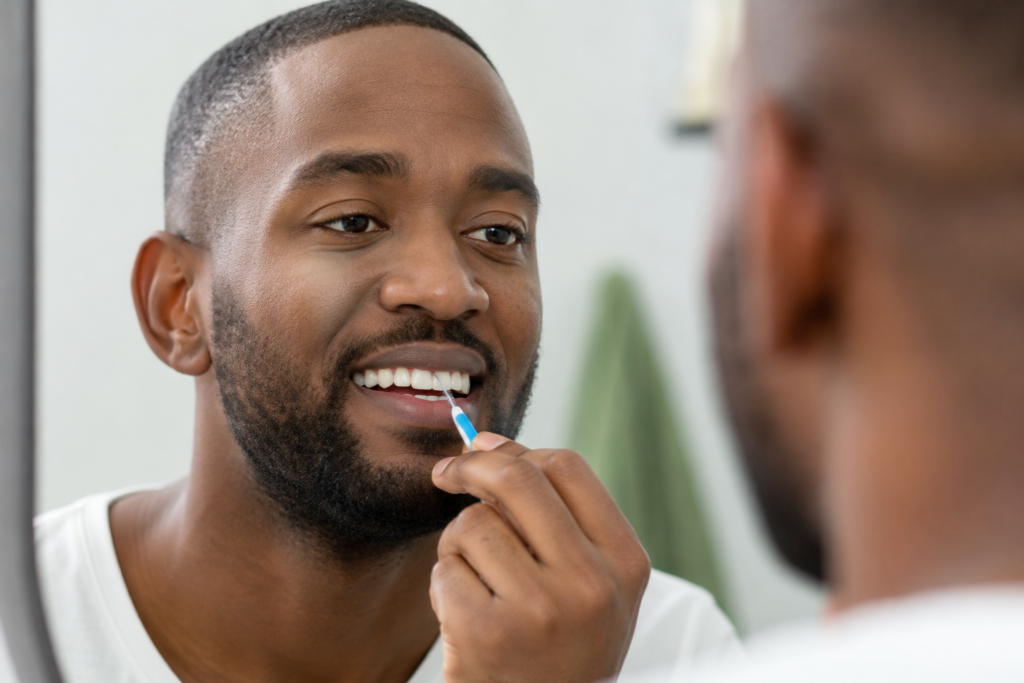
You can read more about the treatment itself in our guide to the dental implant procedure, and about your options overall in our overview of dental implant treatment.
When to Contact Your Dentist
Most recoveries are uneventful, yet it is wise to know the signs worth a call. Get in touch if pain worsens after the first few days instead of easing, if swelling keeps increasing beyond day three, or if you notice ongoing bleeding, a bad taste, fever, or any lasting numbness. Trust your instincts too. If something does not feel right, it is always better to ask.
If you are preparing for an implant, healing from recent surgery, or simply weighing your options, our team is here to guide you through every stage of your dental implant recovery. To book a consultation or a follow-up, reach DentMind CBD Dental Centre on 0715 063640 or online at recordit.ke, and we will help you plan the calm, well-supported recovery you deserve. You can find peer-reviewed detail on recovery timelines in the published research behind this article.
References
- Kahn, A., Masri, D., Shalev, T., Meir, H., Sebaoun, A., & Chaushu, L. (2021). Patients’ perception of recovery after dental implant placement. Medicina, 57(10), 1111. https://doi.org/10.3390/medicina57101111
- O’Dwyer, S. (2021). Exploring patients’ experience of dental implant surgery with or without intravenous conscious sedation: A qualitative study [Doctoral thesis, University College Cork]. CORA. https://hdl.handle.net/10468/11904
- Müller-Mundt, G., Pott, P.-C., Prinz, L., Schaumann, S., Stiesch, M., Schneider, N., & Herbst, F. A. (2025). Patients’ trajectory from tooth loss to dental rehabilitation and living with implant-supported dentures: A qualitative interview study. BMC Oral Health, 25, 705. https://doi.org/10.1186/s12903-025-06072-5
- Sailer, I., Karasan, D., Todorovic, A., Ligoutsikou, M., & Pjetursson, B. E. (2022). Prosthetic failures in dental implant therapy. Periodontology 2000, 88(1), 130–144. https://doi.org/10.1111/prd.12416