Smoking and gum disease share one of the strongest links in all of dental health. If you smoke, your gums face a steady chemical assault that quietly weakens the tissue holding your teeth in place. Many smokers feel fine for years, then notice loose teeth or shrinking gums almost overnight. This guide explains, in plain language, exactly what smoking does inside your mouth and why the damage so often stays hidden until it is advanced.
How Smoking and Gum Disease Are Connected
Gum disease, known clinically as periodontitis, is an infection of the gums and the bone that supports your teeth. It begins when bacteria gather along the gumline and the body’s defences start to break down the surrounding tissue. Over time, the gums pull away, the bone shrinks, and teeth loosen.
Tobacco sits right at the centre of this process. Research consistently shows that smokers are at least 50% more likely to develop periodontal disease than non-smokers, and the risk climbs the more a person smokes.¹ In other words, the relationship is dose dependent: heavier use means heavier damage.
The connection is not a coincidence, either. Decades of clinical and population studies have confirmed that smoking is an independent cause of worse gum health, even after accounting for age, sex, and oral hygiene habits.² So a smoker who brushes well still carries a far higher risk than a non-smoker with the same routine.
Closer to home, the picture matters a great deal. Tobacco use across Africa has been projected to rise in the coming decades, which means more people locally will face the consequences of smoking and gum disease.² Understanding the link early gives you the best chance to protect your teeth before serious damage sets in.
Importantly, the harm reaches every layer of the mouth. Smoking changes the gum tissue itself, alters the bacteria living below the gumline, and weakens the body’s ability to heal. The sections below walk through each of these effects in turn.
What Smoking Does to Your Gum Tissue
Your gums depend on a healthy blood supply. Tiny vessels carry oxygen, immune cells, and nutrients to the tissue, and they also trigger the bleeding and swelling that signal infection. Tobacco interferes with this supply directly.
Smoke constituents tighten and suppress the small blood vessels in the gums, dampening the normal vascular response to plaque bacteria.¹ As a result, the gums of a smoker often look deceptively pale and firm rather than red and inflamed. The infection is still there, but the usual warning lights have been switched off.
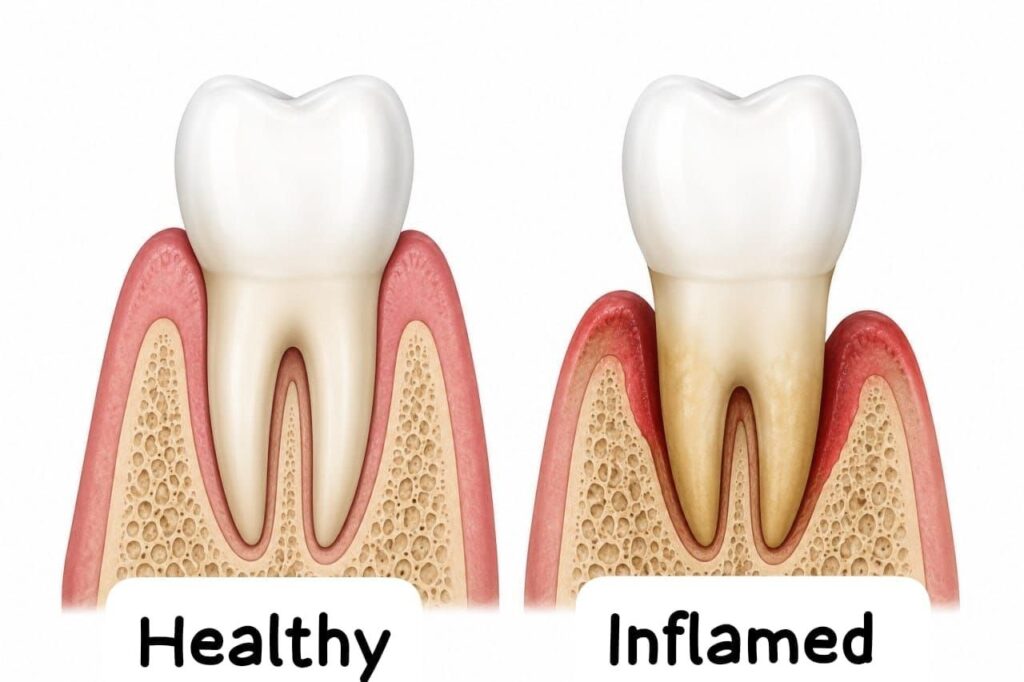
Beneath the surface, the damage runs deeper. Tobacco smoke reduces the repair capacity of the very cells that rebuild gum and bone, including fibroblasts, osteoblasts, and cementoblasts.¹ Because these cells form new tissue, weakening them leaves the gums far less able to recover from everyday wear and infection.
Over time, this combination drives steady loss of attachment. The gums recede, the supporting bone height drops, and the roots of the teeth become exposed.¹ Large clinical studies confirm the pattern, showing that smokers and former smokers present with the most severe stages of periodontal destruction.³
That recession matters for more than appearance. Exposed roots are softer than enamel and far more prone to decay and sensitivity. If you want to understand how gum recession develops and what can be done about it, our detailed guide on gum recession covers the causes and treatment options in full.
How Tobacco Reshapes the Bacteria in Your Mouth
Every mouth hosts a community of bacteria. In a healthy mouth, friendly species keep the harmful ones in check. Smoking disturbs this balance and tips it towards the bacteria that drive gum disease.
Studies that sample the gum pockets of smokers find communities that are richer in harmful, oxygen-avoiding bacteria and poorer in the helpful species linked with health.⁴ Pathogens such as Porphyromonas gingivalis and Fusobacterium nucleatum, both closely tied to periodontitis, become more abundant in people who smoke.⁴
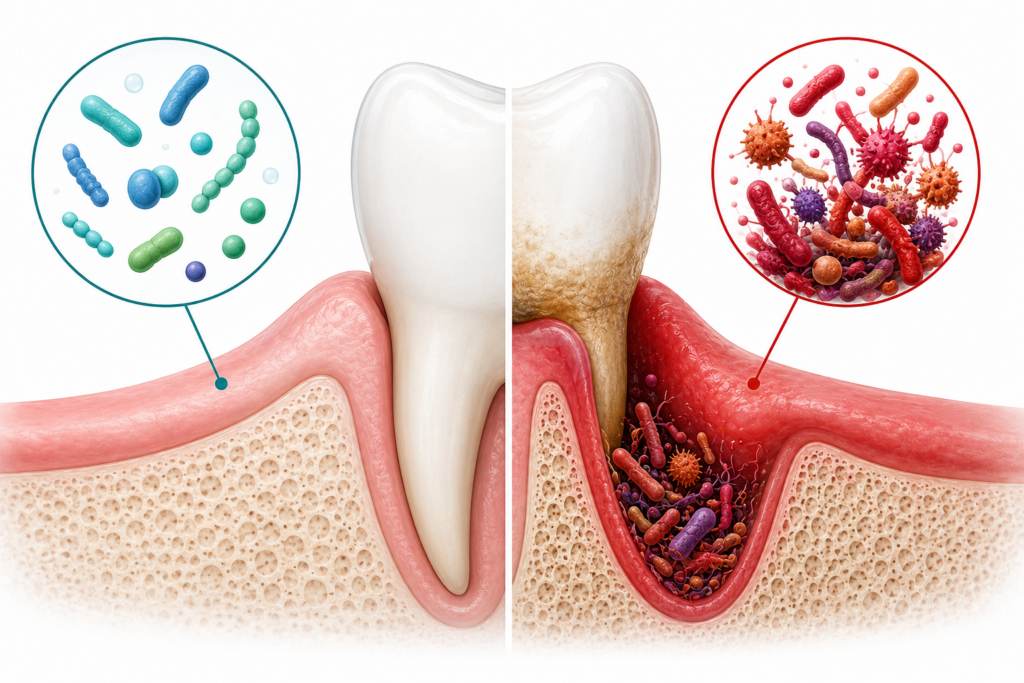
This shift is not limited to the gum pockets. When researchers swabbed the cheeks, tongue, and other soft tissues of smokers, they found that helpful bacteria like Neisseria and Haemophilus dropped away, while periodontitis-linked groups such as Prevotella, Porphyromonas, Tannerella, and Filifactor moved in.⁵ In short, smoking changes the whole landscape of the mouth, not just one corner of it.
Perhaps the most striking finding is timing. A longitudinal study following smokers and non-smokers over many months showed that this harmful bacterial shift, known as dysbiosis, appears in smokers before the clinical signs of gum disease show up.⁴ The damage is being set in motion long before a person notices anything is wrong.
This bacterial imbalance also feeds another common complaint among smokers: persistent bad breath. The same shift towards odour-producing bacteria plays a major role, which we unpack in our article on the science behind bad breath.
Smoking and Gum Disease Beyond Cigarettes
Many people assume that switching from cigarettes to another tobacco or nicotine product removes the threat to their gums. Unfortunately, the evidence on smoking and gum disease points in a more cautious direction.
Shisha, also called hookah or waterpipe, is often viewed as gentler than cigarettes. Yet hookah smoke carries levels of nicotine, carbon monoxide, and harmful particles that match or exceed those of cigarette smoke.¹ Studies have found more bleeding, deeper gum pockets, and greater bone loss in hookah users compared with non-smokers, with damage broadly similar to that seen in cigarette smokers.¹
Cigars and pipes follow the same logic. Because their smoke shares the toxic profile of cigarette smoke, users show more missing teeth, more attachment loss, and more advanced recession than non-smokers.¹ The delivery method changes, but the harm to the gums remains.
Newer products are not a clean escape, either. E-cigarettes and heated tobacco still pass aerosol over the gum tissue, and early research suggests they too alter the oral microbiome in potentially harmful ways.¹ The long-term effects are still being studied, so caution is the wise course.
The takeaway is simple. When it comes to smoking and gum disease, the problem lies with tobacco and nicotine exposure rather than with one particular product. Reducing harm to your gums depends on cutting that exposure, not merely changing how you take it in.
Why Smokers’ Gums Hide the Warning Signs
One of the most dangerous features of smoking and gum disease is how quietly it progresses. The warning signs that usually prompt a person to seek help are muted in smokers, so the disease often advances undetected.
Bleeding gums are the classic early alarm. In most people, inflamed gums bleed during brushing, which is hard to ignore. However, because tobacco suppresses the gum’s blood supply, smokers tend to bleed far less even when significant infection is present.¹ The absence of bleeding feels reassuring, yet it is misleading.
Swelling and redness are similarly dulled. Smoker’s gums often appear tough and pale, masking the inflammation underneath. As a result, many smokers believe their gums are healthy right up to the point where teeth begin to feel loose.
This hidden progression means smokers frequently arrive at the dental chair with disease that is already advanced. By then, bone has been lost, and the options for saving teeth are narrower. Early detection is therefore far more valuable for smokers than for anyone else.
Because the usual signs cannot be trusted, regular professional check-ups become essential rather than optional. A thorough periodontal examination can reveal pockets, attachment loss, and early bone changes long before you would notice them yourself. For smokers, that professional eye is the most reliable safeguard available.
Why Gum Disease in Smokers Is a Whole-Body Concern
The damage from smoking and gum disease rarely stays inside the mouth. The same pathogens that thrive below a smoker’s gumline have been tied to problems well beyond the teeth, which is why dentists treat periodontal health as part of overall health.
Two of the bacteria that smoking encourages, Porphyromonas gingivalis and Fusobacterium nucleatum, are now being studied for their links to conditions elsewhere in the body.⁴ Researchers have connected these organisms with several serious illnesses, and gum infection is increasingly seen as a window into a person’s wider wellbeing.⁴
There is a practical thread here as well. Because smokers carry both a heavier load of these bacteria and a weakened immune defence, the mouth becomes a more welcoming environment for infection to take hold and spread.¹ Tackling gum disease therefore does more than save teeth.
For many people, this wider stake becomes a powerful reason to act. Concern for general health, and for the example set for children and grandchildren, often motivates a quit attempt more strongly than worry about the gums alone.¹ Your dental team can use that motivation to help you move forward.
Tooth loss is the clearest local cost. Smokers consistently show the most severe stages of periodontal disease and the greatest tooth loss, with former smokers also bearing heavy damage from years of past exposure.³ Each lost tooth then changes how you chew, speak, and care for the teeth that remain.
How Smoking Slows Gum Treatment and Healing
The harm from tobacco does not stop once gum disease is diagnosed. Smoking also makes treatment harder and recovery slower, which is one of the most important things any smoker should understand.
When a dentist treats periodontitis, the goal is to clean below the gumline and let the tissue reattach and heal. In smokers, this healing is impaired. Outcomes after non-surgical cleaning, surgical procedures, bone grafts, and gum surgery are all consistently worse in people who smoke.¹
Dental implants tell the same story. Smoking is a recognised risk factor for implant failure, because the tissue around the implant struggles to heal and integrate.¹ For this reason, many clinicians advise stopping tobacco before and after implant surgery to give the procedure the best chance of success.
There is a behavioural pattern, too. Smokers are less likely than non-smokers to keep up with the regular maintenance visits that hold gum disease in check after treatment.¹ This drop-off compounds the biological disadvantage and raises the risk of the disease returning.
None of this means treatment is pointless for smokers. Far from it. It does mean that quitting alongside treatment dramatically improves the result. To see how far gum disease can be turned around with the right care, read our companion piece on whether you can reverse gum disease.
What Happens to Your Gums When You Stop
Here is the encouraging part. The link between smoking and gum disease works in reverse, too. When you stop using tobacco, your gums begin to recover in meaningful ways.
The blood supply to the gums improves once the suppressing chemicals clear, which means the tissue can finally mount a proper defence and repair response.¹ Healing capacity returns, and gum treatments start to work much closer to the way they do in non-smokers.
The bacterial picture can shift as well. Because tobacco drives the imbalance towards harmful species, removing that pressure gives the friendly bacteria room to recover and helps restore a healthier balance in the mouth.⁴ This rebalancing supports both your gums and your breath.
Quitting is rarely easy, and few people manage it on the first attempt. That is completely normal. What matters is that every quit attempt is worthwhile, and the support of a dental team genuinely improves your chances. Dentists are well placed to help, because they see the early effects of tobacco firsthand and can connect patients with practical cessation support.¹ You can read the full peer-reviewed review of how tobacco affects the gums and how cessation helps in this open-access paper in Periodontology 2000.
Practical Steps to Protect Your Gums
While stopping tobacco is the single most effective move, there are sensible steps that help in the meantime. None of these undo the harm of smoking, yet together they slow the damage and keep problems visible sooner.
First, do not rely on your gums to warn you. Because tobacco hides bleeding and swelling, you cannot judge your gum health by how your mouth feels.¹ Treat regular professional check-ups as your early-warning system instead of waiting for symptoms.
Second, raise your home care above the average. Thorough twice-daily brushing and daily cleaning between the teeth matter even more for smokers, because your gums have less margin to spare. Interestingly, brushing frequency has a measurable effect on the balance of bacteria across the mouth, so consistency genuinely counts.⁵
Third, watch the exposed roots. Where the gums have already receded, the softer root surface is vulnerable, so gentle technique and a fluoride toothpaste help protect these areas. Ask your dentist or hygienist to show you the right method for your mouth.
Finally, be honest with your dental team about how much and what you smoke. That information shapes the care you receive, from how often you are seen to how procedures are planned.¹ Clear conversations lead to better, more personalised treatment.
If you smoke and you are worried about your gums, the most powerful step you can take is to act before the warning signs appear. A thorough periodontal check at DentMind CBD Dental Centre can pick up hidden damage early and set you on a clear path forward, whether that involves treatment, a quit plan, or both. Book your assessment today through recordit.ke or call us on 0715 063640, and let our team in Nairobi CBD help you protect the teeth you have.
Frequently Asked Questions
Does smoking really cause gum disease, or does it just make it worse? Both. Smoking is an independent cause of gum disease, not simply an aggravating factor. Studies confirm that smokers face a much higher risk even when their brushing and flossing habits match those of non-smokers, and the damage worsens the more a person smokes.
Why don’t my gums bleed if I have gum disease? Tobacco suppresses the small blood vessels in your gums, so bleeding is reduced even when infection is present. This is why smokers often feel their gums are healthy when, in fact, disease is advancing quietly beneath the surface.
Is vaping or shisha safer for my gums than cigarettes? The current evidence does not support this assumption. Shisha smoke carries levels of nicotine and toxins comparable to cigarettes, and it produces similar gum damage. Vaping and heated tobacco also expose the gums to harmful substances, so they are not a safe alternative for your periodontal health.
Can my gums recover if I stop smoking? Yes, to a meaningful degree. Quitting restores blood flow to the gums, improves healing, and allows the bacterial balance in your mouth to shift back towards health. Gum treatments also become far more effective once you stop, although tissue already lost may need professional care to manage.
How often should a smoker see the dentist? More often than a non-smoker, because the usual warning signs are hidden. Regular professional check-ups are the most reliable way to catch hidden gum damage early. Your dentist will advise on the right interval based on your gum health.
Footnotes
¹ Chaffee, B. W., Couch, E. T., Vora, M. V., & Holliday, R. S. (2021). Oral and periodontal implications of tobacco and nicotine products. Periodontology 2000, 87(1), 241–253. https://doi.org/10.1111/prd.12395
² Chaffee, B. W., Couch, E. T., Vora, M. V., & Holliday, R. S. (2021). Oral and periodontal implications of tobacco and nicotine products. Periodontology 2000, 87(1), 241–253. https://doi.org/10.1111/prd.12395
³ Beklen, A., Sali, N., & Yavuz, M. B. (2022). The impact of smoking on periodontal status and dental caries. Tobacco Induced Diseases, 20(August), 72. https://doi.org/10.18332/tid/152112
⁴ Tamashiro, R., Strange, L., Schnackenberg, K., Santos, J., Gadalla, H., Zhao, L., Li, E. C., Hill, E., Hill, B., Sidhu, G. S., Kirst, M., Walker, C., & Wang, G. P. (2023). Smoking-induced subgingival dysbiosis precedes clinical signs of periodontal disease. Scientific Reports, 13, 3755. https://doi.org/10.1038/s41598-023-30203-z
⁵ Galvin, S., Anishchuk, S., Healy, C. M., & Moran, G. P. (2023). Smoking, tooth loss and oral hygiene practices have significant and site-specific impacts on the microbiome of oral mucosal surfaces: A cross-sectional study. Journal of Oral Microbiology, 15(1), 2263971. https://doi.org/10.1080/20002297.2023.2263971
Note: Footnotes 1 and 2 cite the same review for distinct claims, in line with APA practice of repeating a source where the in-text superscript sequence requires it. If you prefer a single reference number reused, collapse ² into ¹ throughout the body.
Clinic Details
DentMind CBD Dental Centre: Victor House, Third Floor, Kimathi Street, Nairobi CBD
Phone: 0715 063640
Website: dentmindcbd.co.ke
Bookings: recordit.ke
Open: Monday to Sunday