Gum recession is one of those dental problems that creeps up quietly. It tends to develop over years rather than weeks, usually without pain, so most people only notice once a tooth looks longer than it used to or starts twingeing with cold water. The everyday name for it is receding gums, and it is far more common than most patients expect. A large review that pooled data from tens of thousands of people found that the majority of adults have at least one site of recession of a millimetre or more.¹
That does not mean it should be ignored. When gums pull back, they expose part of the tooth root, which is softer and more vulnerable than the crown. Over time this can lead to sensitivity, root decay, and a smile that looks older than it should. The encouraging news is that gum recession can almost always be slowed or stopped once the cause is understood, and in suitable cases a dentist can even cover the exposed root again.
This guide explains what gum recession is, what causes it, how dentists treat it, and the everyday steps that help prevent it.
What Is Gum Recession?
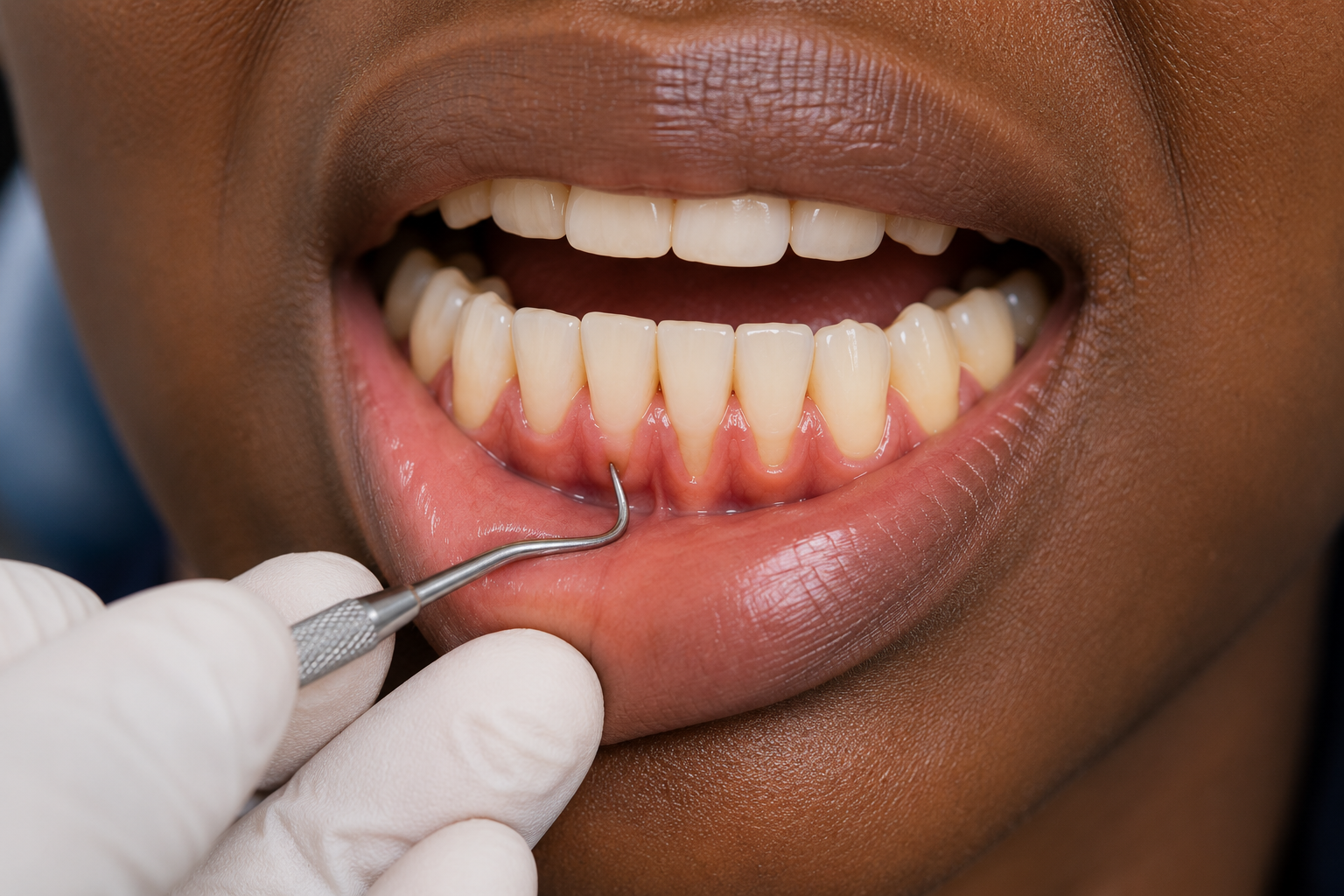
Gum recession is the gradual loss of gum tissue around a tooth, so the gum margin moves down towards the root and exposes more of the tooth than normal.² In simple terms, the gum line shifts past the point where the enamel crown meets the root.
As the gum moves back, small gaps or pockets can form between the tooth and the gum line. Plaque bacteria collect in these spaces easily, which can make the problem worse if nothing changes.
The first sign most people notice is sensitivity. Cold drinks, cold air, or sweet foods may trigger a sharp, brief twinge, because the exposed root has no protective layer of enamel. Another common clue is a tooth that appears longer than its neighbours, or a small notch you can feel with your tongue near the gum line.
How Common Is Gum Recession?
Gum recession is widespread. A global systematic review and meta-analysis of fifteen studies, covering more than thirty-seven thousand people, estimated that roughly seventy-eight to eighty-five per cent of adults have at least one affected tooth at the one millimetre threshold.¹
It also becomes more likely with age, and it is especially common in people over fifty. Even so, it is far from an older person’s problem alone.² Younger adults develop it too, often from habits such as brushing too hard. The point is that almost anyone can be affected, which is why it helps to know what drives it.
What Causes Gum Recession?
Gum recession rarely comes from a single cause. In most cases, several factors act together over time. A recent systematic review and meta-analysis identified the factors most strongly linked to receding gums, and the points below reflect that evidence.³
Gum disease and plaque
The strongest driver is periodontal disease, the bacterial gum infection that destroys the tissue and bone holding teeth in place. People with periodontitis are many times more likely to have gum recession than those without it.³ Dental plaque on its own also raises the risk, because the bacteria it contains inflame and weaken the gums.³ This is exactly why thorough daily cleaning matters so much, and why treating active gum disease early protects against further recession.
Brushing too hard
Brushing might feel like the safest thing you can do for your teeth, yet scrubbing too hard, or using a stiff brush with a sawing action, can wear the gums away. A 2025 review on toothbrushing confirmed that an aggressive technique contributes to both gum recession and wear on the tooth surface.⁴ The answer is not to brush less, but to brush correctly, with a soft brush and gentle pressure.
Smoking and alcohol
Tobacco use is a well established risk factor. Smokers are significantly more likely to develop gum recession, partly because tobacco reduces blood flow to the gums and makes infection harder to clear.³ Regular alcohol consumption has also been linked to a higher risk.³
Teeth grinding and bite problems
Clenching or grinding the teeth, often during sleep, places heavy force on the teeth and the gums around them. Over time this kind of overload is associated with recession.³ A bite that does not meet evenly can have a similar effect on certain teeth.
Anatomy and genetics
Some people are simply more prone to receding gums. Thin gum tissue offers less protection, and a high or prominent frenulum, the small fold of tissue that links the lip or cheek to the gum, can tug the gum margin downwards. Men are also somewhat more likely to be affected than women.³ None of these can be changed, but knowing about them helps a dentist plan the right care.
Signs and Symptoms to Watch For
Gum recession can be easy to miss, especially in the early stages. It is worth watching for a few telltale signs.
These include a tooth that looks longer than those around it, sensitivity to cold, heat, or sweet foods, a small notch or step you can feel near the gum line, and a visible tooth root. Gums that bleed, or look red and swollen, can point to underlying gum disease, which may also bring on persistent bad breath.
If you notice any of these, it is worth booking a check. Recession does not reverse on its own, so the sooner the cause is addressed, the more tooth and gum you keep.
How Dentists Treat Gum Recession
Treatment depends on how far the recession has progressed and what is driving it. The first step is always to find and remove the cause.² For many people, that means non-surgical care.
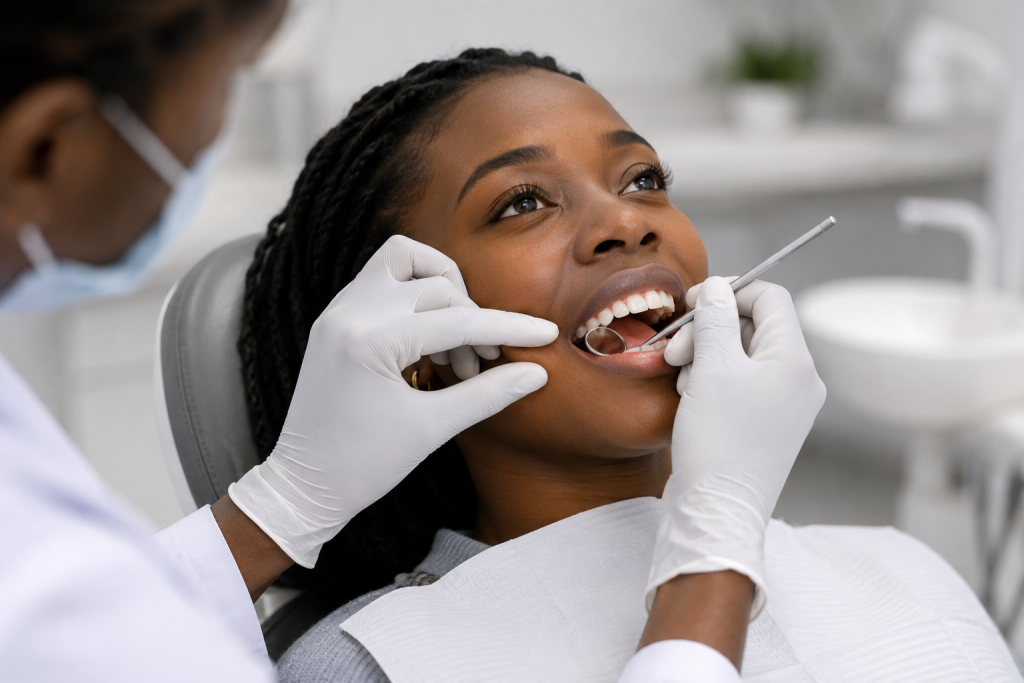
Non-surgical treatment focuses on getting the mouth healthy and stable. It usually starts with a professional clean to remove plaque and hardened tartar, along with advice on correcting brushing technique and treatment of any active gum disease. Where a rough or overhanging filling is trapping plaque near the gum, the dentist may smooth or replace it. Desensitising agents can also settle the sensitivity that often comes with exposed roots.²
When recession is more advanced, or when the exposed root is causing ongoing sensitivity or an aesthetic concern, a dentist may recommend surgery to cover the root. Modern, evidence-based root coverage procedures, such as connective tissue grafting and the coronally advanced flap or tunnel techniques, can restore lost tissue over the root in suitable cases.² A dentist or periodontist will first assess whether the gum and bone around the tooth give a good chance of success.
The key point is that treatment is tailored. What works for a single sensitive tooth differs from what is needed when gum disease has affected the whole mouth.
Can You Reverse Gum Recession?
This is the question patients ask most. The honest answer is that gum tissue does not grow back on its own once it has been lost. However, that is not the end of the story. With the right care, gum recession can be stopped from getting worse, and surgery can cover the exposed root again in the right cases.²
If gum disease is the cause, treating the infection is essential, because the recession will keep advancing while the disease is active. We cover that side of the picture in detail in our guide to whether gum disease can be reversed.
How to Prevent Gum Recession
Prevention comes down to protecting the gums from the causes above. A handful of habits make the biggest difference.
Brush correctly, not harder. Use a soft toothbrush, gentle pressure, and a technique your dentist has shown you, then replace the brush every three to four months. Correct brushing protects the gums while still clearing plaque.⁴
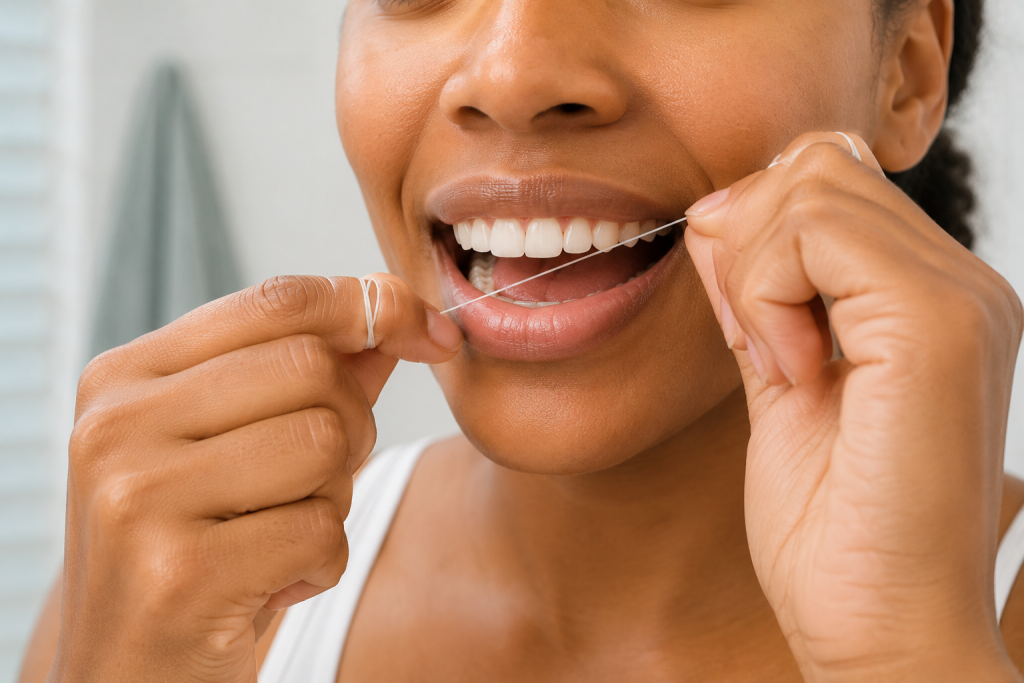
Keep plaque under control. Brush twice a day and clean between the teeth daily with floss or interdental brushes. Since plaque and gum disease are leading causes of recession, daily cleaning is the single most valuable habit.³
Stop smoking and limit alcohol. Both are modifiable risk factors, so cutting back lowers your risk over time.³
Protect against grinding. If you clench or grind, ask your dentist whether a night guard would help take the pressure off your teeth and gums.
See your dentist regularly. Professional cleaning removes the hardened tartar a toothbrush cannot reach, and routine checks catch recession and gum disease early, while they are easiest to manage.
Frequently Asked Questions
Is gum recession serious? On its own, mild recession is mostly an aesthetic and sensitivity issue. Left unchecked, though, it can expose the root to decay and, when gum disease is behind it, contribute to tooth loss. That is why early assessment matters.
Does gum recession always need surgery? No. Many cases are managed without surgery, through professional cleaning, better brushing technique, and treating gum disease. Surgery is reserved for more advanced recession or where root coverage is needed.
Can children and young adults get gum recession? Yes. While it is more common with age, younger people develop it too, often from brushing too hard or from gum inflammation. Good habits early on go a long way.
Will whitening or sensitive toothpaste fix it? Sensitive toothpaste can ease the symptoms of an exposed root, but it does not stop the recession itself. Only addressing the underlying cause does that, which is why a check-up is the right starting point.
Because gum recession is gradual and often painless, it is easy to put off a visit. Yet early action is what protects your teeth in the long run. If your teeth are sensitive, look longer than they used to, or you can feel a notch at the gum line, those are signals worth checking. At DentMind CBD Dental Centre on Kimathi Street in Nairobi CBD, our team can work out what is causing your gum recession, treat any underlying gum disease, and put a clear prevention plan in place to protect your smile. We are open every day of the week, so you can book online through recordit.ke or call 0715 063640 to start looking after your gums today.
References
- Yadav et al. (2023). Global prevalence of gingival recession: A systematic review and meta-analysis. Oral Diseases. https://doi.org/10.1111/odi.14289
- Imber, J. C., & Kasaj, A. (2021). Treatment of gingival recession: When and how? International Dental Journal, 71(3), 178–187. https://doi.org/10.1111/idj.12617
- Marschner, F., Lechte, C., Kanzow, P., Hraský, V., & Pfister, W. (2025). Systematic review and meta-analysis on prevalence and risk factors for gingival recession. Journal of Dentistry, 155, 105645. https://doi.org/10.1016/j.jdent.2025.105645
- Kumar, S., Gopalkrishna, P., Syed, A. K., & Sathiyabalan, A. (2025). The impact of toothbrushing on oral health, gingival recession, and tooth wear: A narrative review. Healthcare, 13(10), 1138. https://doi.org/10.3390/healthcare13101138