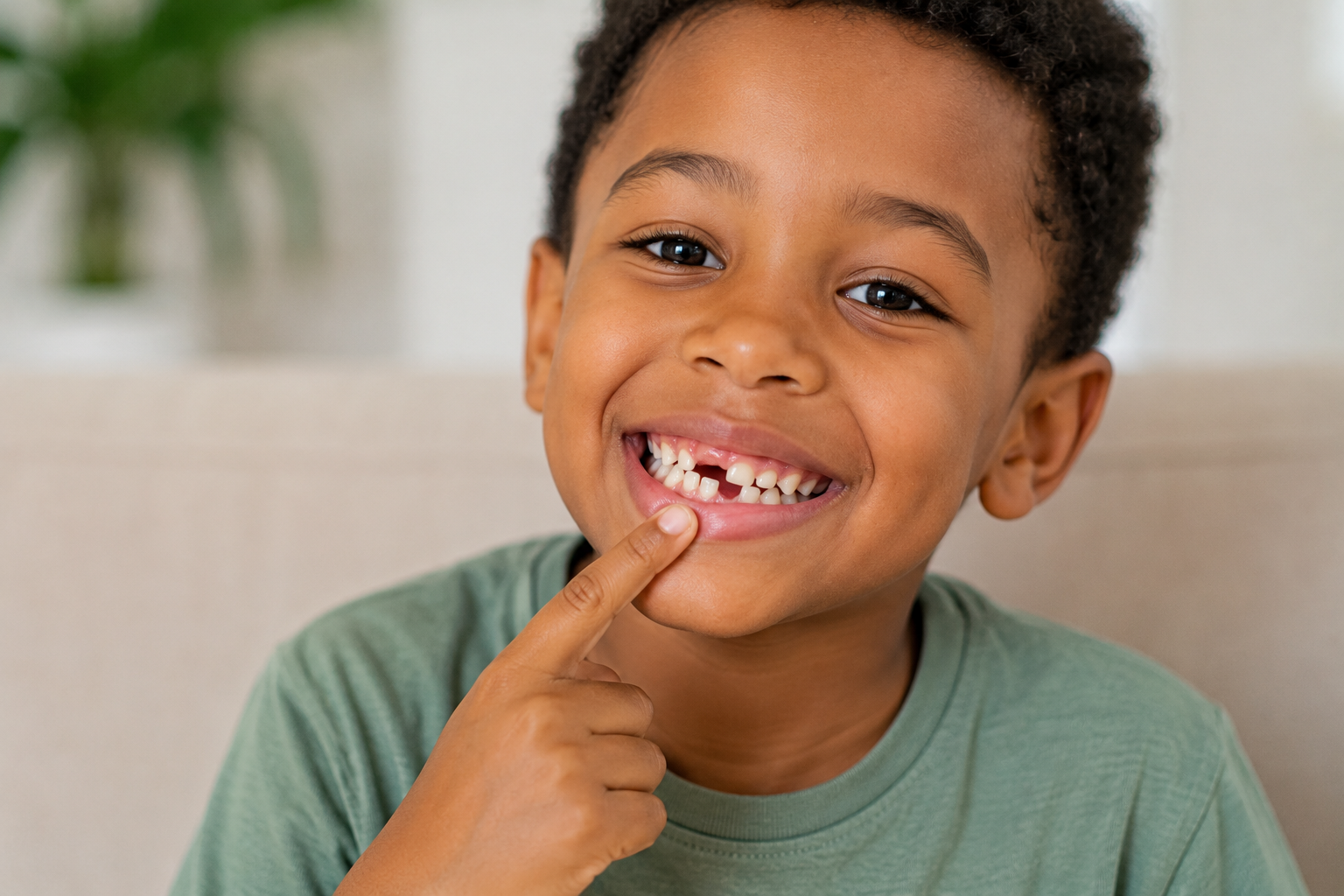
A loose baby tooth is one of the small milestones of childhood, and for most children it is nothing to worry about. Even so, it can leave parents unsure of what to do. Should you leave it alone, help it along, or bring your child in? This guide explains why a loose baby tooth happens, how to care for it safely at home, and the five signs that mean a visit to the dentist is the right call.
Why a loose baby tooth is usually normal
Baby teeth, also called primary or milk teeth, are meant to be temporary. They loosen and fall out to make room for the adult teeth growing underneath. This shedding is a natural, physiological process, not a sign that something has gone wrong.¹ ²
Baby teeth also arrive in a fairly predictable order over the first couple of years, and they are replaced gradually across several years rather than all at once.⁴ So a wobbly tooth here and there, spread out over childhood, is exactly what you would expect.
What causes baby teeth to loosen and fall out
As the adult tooth develops in the jaw beneath a baby tooth, it presses on the root of the baby tooth above it. Over time, that root is slowly resorbed, meaning the body gradually breaks it down and reabsorbs it.¹ ² The process is slight and progressive, advancing as the child grows, rather than happening all at once.¹
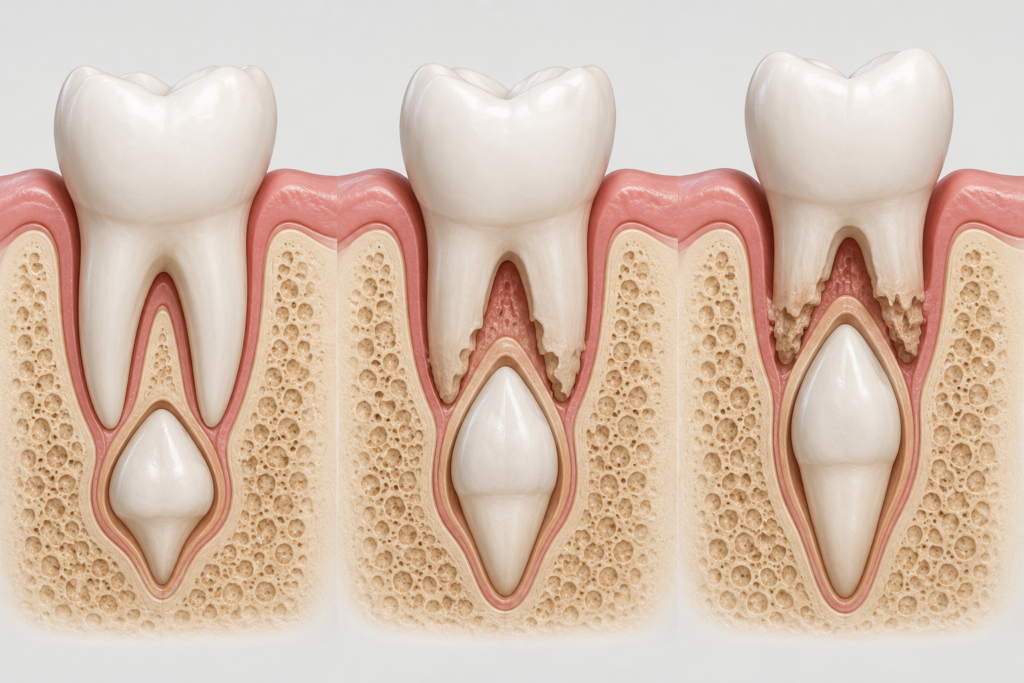
This is why healthy shedding is usually painless. By the time you notice a loose baby tooth, most of its root has often already dissolved from below, so the tooth is simply waiting to let go. Gentle wobble, little or no pain, and no swelling are all reassuring signs that nature is taking its course.
Safe home care for a loose baby tooth
For most children, the best approach to a loose baby tooth is patience and a little gentle care.
Let it wobble on its own. The great majority of baby teeth come out without any help, often while eating or brushing.
Gentle wiggling with clean hands or the tongue is fine, and many children enjoy doing this themselves. Do not use force, string, or any kind of pulling. Forcing a tooth that is not ready can cause pain, bleeding, and sometimes leave part of the root behind.
Offer softer foods if chewing feels uncomfortable, and let your child bite into crunchy fruit and vegetables if they want to, as this can help a ready tooth ease out naturally.
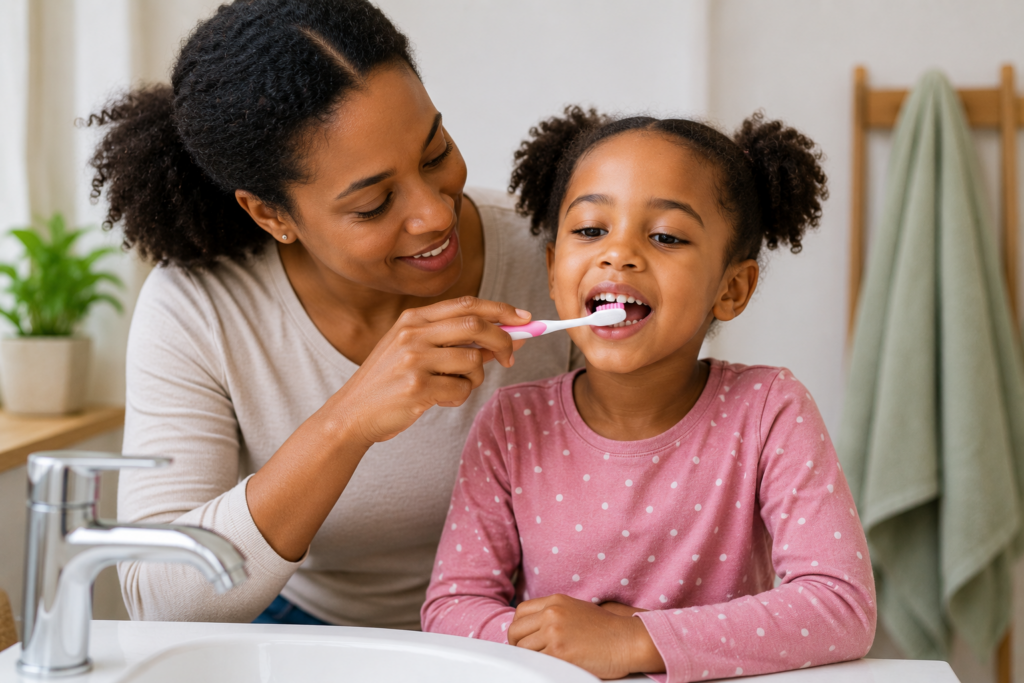
Keep brushing gently around the tooth twice a day. Good hygiene matters just as much while a tooth is on its way out.
If a little bleeding happens when the tooth comes out, fold a clean piece of gauze, place it over the space, and ask your child to bite down with light pressure for a few minutes. This settles quickly. A calm, positive tone from you helps your child feel relaxed about the whole thing.
When a loose baby tooth needs a dentist: 5 signs
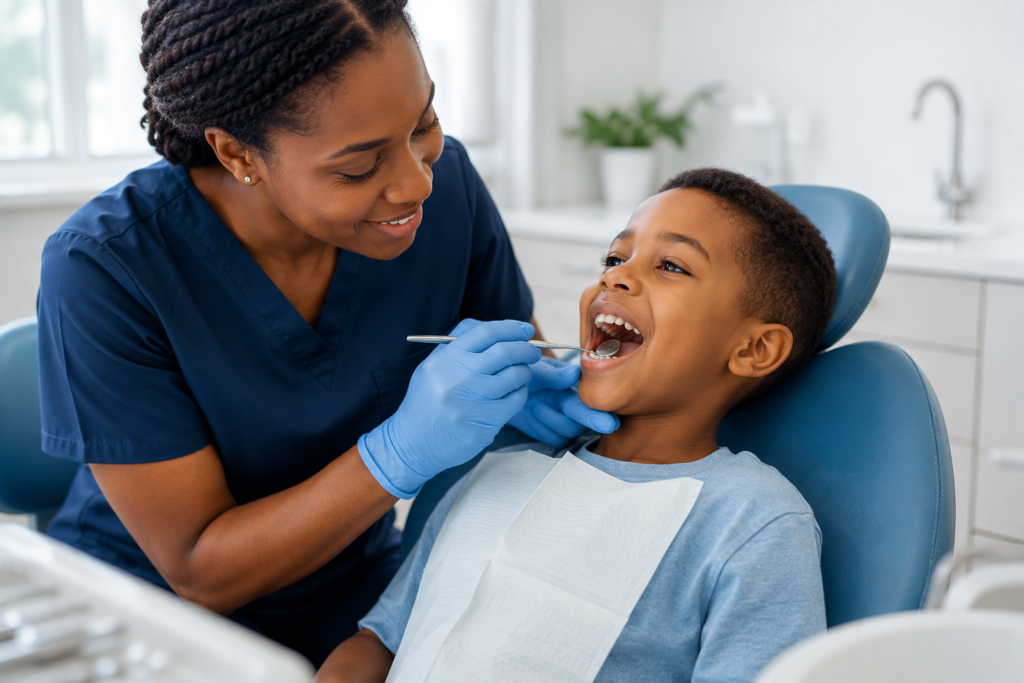
A loose baby tooth is usually harmless, but there are times when a check-up is wise. Bring your child in if you notice any of the following.
- The tooth became loose after a knock, fall, or sports injury. A tooth loosened by trauma is a different situation from natural shedding and should be seen promptly.
- There is pain, swelling, a gum boil, or any discharge around the tooth. These can point to infection rather than normal loosening.
- A tooth stays loose for a long time but will not come out, or it looks stuck or sunken below the neighbouring teeth. Sometimes a baby tooth is over-retained or becomes fixed to the bone, and its root does not resorb in the usual way, particularly when the adult tooth beneath is missing or out of position.¹ ²
- An adult tooth appears behind or beside a baby tooth that has not yet fallen, sometimes called “shark teeth.” The baby tooth may need a professional check to help the adult tooth settle into place.
- A tooth is loose in a child who seems too young for it, or a wobble appears for no clear reason. A quick look gives peace of mind and rules out any underlying problem.
If any of these apply, our emergency dental care team is happy to take a look.
Why you should not rush or force it out
It can be tempting to speed things along, but there are good reasons to let a loose baby tooth come out in its own time.
Baby teeth do more than chew. They hold space in the jaw and help guide the adult teeth into the right position. When a baby tooth is lost too early, before the adult tooth is ready, neighbouring teeth can drift into the gap. This reduces the space available and can lead to crowding or bite problems that may later need orthodontic help or a space maintainer.³ This matters most with the back baby teeth, the molars, which do the heavy lifting of holding space.³
So the safest plan is simple. Let a healthy loose baby tooth wobble and shed naturally, and reach out to us if anything looks or feels out of the ordinary.
Looking after your child’s smile
Most loose baby teeth need nothing more than patience and gentle care, and watching your child lose their first tooth can be a lovely moment. When something seems off, a quick check gives real peace of mind, and building good habits early sets your child up for a healthy adult smile. You can read more in our guide to diet and healthy teeth for children, and if you would like a friendly children’s dentistry check-up, the team at DentMind CBD Dental Centre on Kimathi Street is here to help, so book your child’s visit online through recordit.ke or call us on 0715 063640.
For further reading, the NHS guidance on taking care of children’s teeth is a helpful, independent resource.
FOOTNOTES
¹ Caleya, A. M., Gallardo, N. E., Feijoo, G., Mourelle-Martínez, M. R., Martín-Vacas, A., & Maroto, M. (2022). Relationship between physiological resorption of primary molars with its permanent successors, dental age and chronological age. Children, 9(7), 941. https://doi.org/10.3390/children9070941
² Consolaro, A., Rodrigues, M. T., Consolaro, R. B., & Martins, G. G. (2021). The two extremes of physiological tooth resorption in primary tooth with or without the permanent successor tooth. Dental Press Journal of Orthodontics, 26(6), e21ins6. https://doi.org/10.1590/2177-6709.26.6.e21ins6
³ Gandhi, J. M., & Gurunathan, D. (2022). Short- and long-term dental arch spatial changes following premature loss of primary molars: A systematic review. Journal of Indian Society of Pedodontics and Preventive Dentistry, 40(3), 239–245. https://doi.org/10.4103/jisppd.jisppd_230_22
⁴ Ogodescu, E., Popa, M., Isac, C., Pinosanu, R., Olaru, D., Cismas, A., Tudor, A., & Miron, M. (2022). Eruption timing and sequence of primary teeth in a sample of Romanian children. Diagnostics, 12(3), 606. https://doi.org/10.3390/diagnostics12030606