Every family has its own dental advice. Some of it is passed down from grandparents, some comes from friends, and more and more of it arrives through WhatsApp forwards and TikTok videos. A lot of that advice is harmless. However, some of it can quietly damage your teeth and gums, or stop you from getting treatment when you actually need it.
At DentMind CBD Dental Centre, we hear the same beliefs again and again from patients across Nairobi. So, in this guide, we look at five of the most common dental myths Kenyans believe, explain where each one comes from, and set out what the evidence really says.
Myth 1: “Charcoal or Salt Makes Teeth Whiter and Stronger”
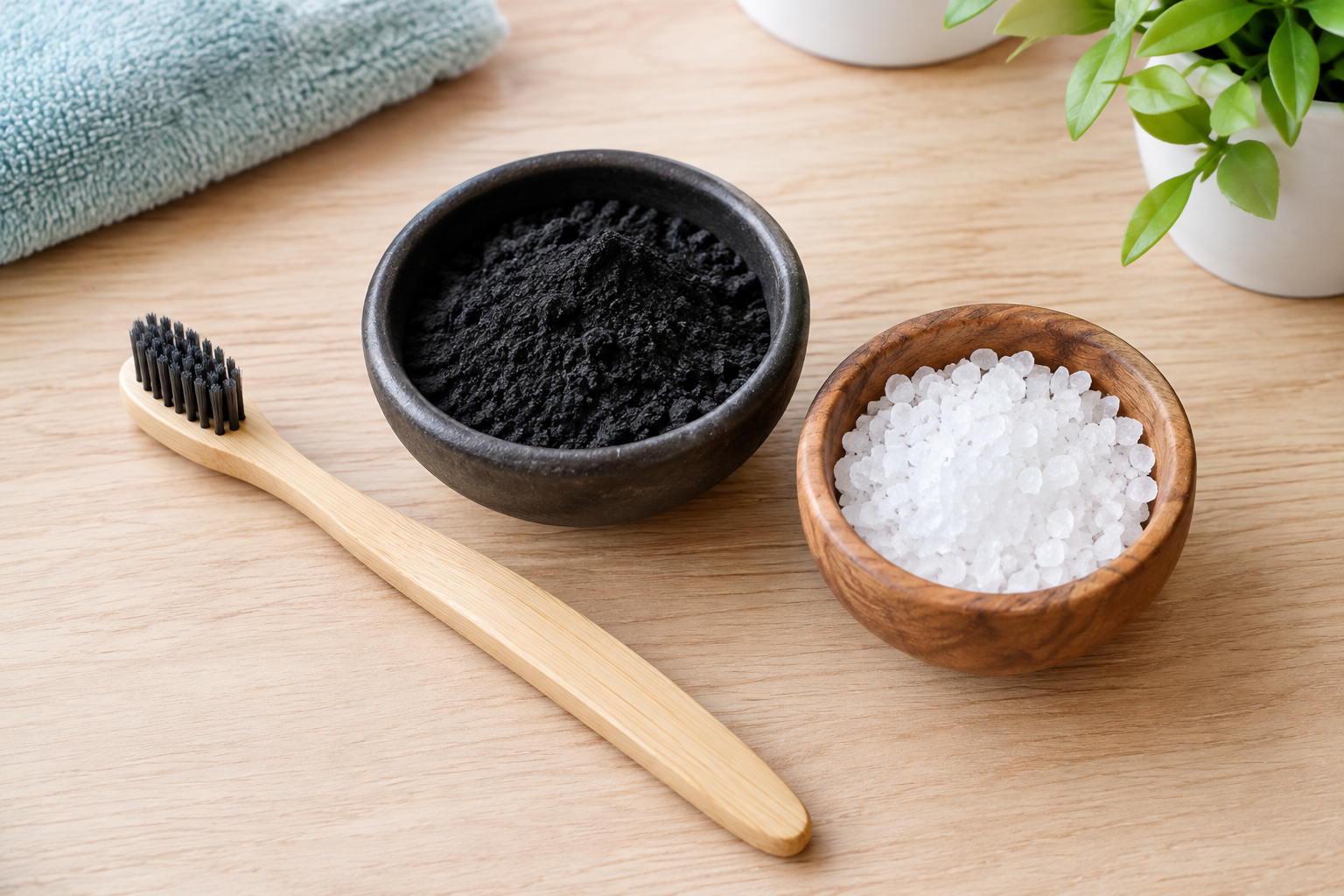
Brushing with charcoal, whether from the jiko or in a trendy black toothpaste, is popular because it seems to make teeth look brighter straight away. Salt has an even longer history, and many people still dip their toothbrush in it, believing it strengthens teeth and kills germs.
The problem is that both work mainly by scrubbing. Salt crystals are coarse and gritty, and charcoal is abrasive too. A systematic review of laboratory studies found that activated charcoal was no more effective at whitening than other toothpastes, and it raised concerns about its abrasive effect on tooth surfaces.¹ Separate laboratory testing has also measured how abrasive charcoal toothpastes are on enamel and on dentine (the softer layer beneath).²
Why does that matter? Enamel does not grow back. When it wears thin, the yellower dentine underneath shows through, so over time teeth can actually look darker, not whiter. Worn teeth also tend to become sensitive to cold and sweet foods. Scrubbing with grit can also make the gums recede.
The truth: what genuinely strengthens teeth is fluoride. A Cochrane review found that brushing with a standard fluoride toothpaste is one of the most effective ways to prevent tooth decay.³ If you want a brighter smile, professional whitening is a far safer route than home scrubbing. You can read more in our guide to teeth whitening in Nairobi CBD. And if your teeth have brown marks that brushing will not shift, they may be caused by fluorosis rather than surface stains, which we explain in our article on brown teeth, causes and fixes.
Myth 2: “Removing a Tooth Is Better Than Saving It”
When a tooth is painful or badly decayed, many people simply ask the dentist to “just remove it”. An extraction feels quick and final. In contrast, a filling or root canal treatment can sound complicated, and some people worry that the tooth will give trouble again later.
Removing a tooth is sometimes the right choice. Yet it is rarely the “easy option” it seems, because a gap in your mouth has consequences of its own. Over time, the teeth on either side of the gap can tilt or drift into the space, and the opposite tooth can grow down into it. As a result, your bite changes, food traps more easily, and cleaning becomes harder. The jawbone that once held the tooth also shrinks gradually once the root is gone. Losing back teeth, in particular, makes chewing less efficient and can place extra strain on the teeth that remain.
Saving a natural tooth, on the other hand, is often very successful. A 2025 systematic review found that teeth treated with root canal therapy and teeth replaced with dental implants both showed high long-term survival, generally above 95%.⁴ In other words, a well-treated natural tooth can serve you as reliably as a replacement.
The truth: where a tooth can be saved, saving it is usually the better long-term choice for your bite, your jawbone and your comfort. Ask your dentist to explain all your options, including what happens if the tooth is removed and how the gap could be replaced, before you decide.
Myth 3: “Pulling an Upper Tooth Can Damage Your Eyes”
This is one of the most widespread dental beliefs in Kenya, and it is shared in many other countries too. A survey of members of the public in India, for example, found that a large number believed that removing upper teeth could cause problems with the eyes.⁵ Because of this fear, some people keep painful, infected upper teeth for months or even years.
It is easy to see where the idea comes from. The upper teeth sit in the same bone as the lower part of the face, and the upper canine is even called the “eye tooth” in English. In addition, pain from an infected upper tooth can spread towards the cheek and the area under the eye.
However, the roots of the upper teeth do not reach the eye, and routine extraction does not involve the nerve that controls your vision. The eye sits within its own bony socket, separated from the tooth roots. The roots of some upper back teeth lie close to the sinus (the air space inside the cheekbone), and your dentist will take care around that area, but this has nothing to do with your eyesight.
The truth: a routine extraction of an upper tooth does not damage your eyes. What can cause harm is leaving an infected tooth in place, because dental infections can spread into the surrounding tissues of the face. If an upper tooth needs attention, do not let this myth delay your treatment.
Myth 4: “Bleeding Gums Are Normal, So Stop Brushing There”
Many people notice a little pink in the sink after brushing and assume it is normal. Others do the opposite of what they should: they avoid brushing the area that bleeds, worried that they are making it worse.
In fact, bleeding gums are not normal. Bleeding is the main sign of gingivitis, which is inflammation of the gums caused by the build-up of plaque (the sticky film of bacteria) along the gum line.⁶ When you brush less in that area, even more plaque collects, and the bleeding gets worse.
The good news is that gingivitis can be reversed. Once the plaque is removed and kept under control, the gums usually return to health.⁶ ⁷ Left untreated, however, gingivitis can progress to periodontitis, a deeper gum disease that damages the bone supporting the teeth and is a major cause of tooth loss in adults.
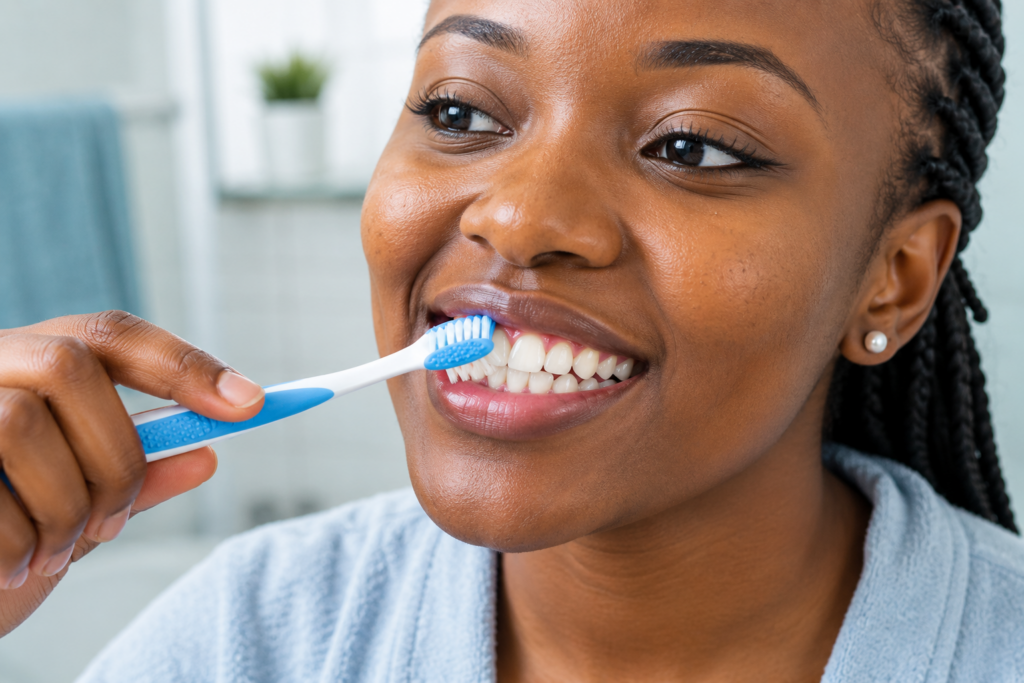
The truth: if your gums bleed, keep brushing gently but thoroughly twice a day with a soft toothbrush, angling the bristles towards the gum line, and clean between your teeth every day. A professional scale and polish removes hardened deposits that a toothbrush cannot. If the bleeding carries on for more than a week or two, or your gums are swollen, receding or painful, book a check-up.
Myth 5: “Baby Teeth Don’t Matter Because They Fall Out Anyway”
Because milk teeth are temporary, many parents assume that decay in them is not worth treating. It is an understandable view, but it can cause real problems for children.
To begin with, decay in young children is extremely common. A global review estimated that close to half of preschool children worldwide are affected by early childhood caries.⁸ Decayed baby teeth can be painful, disturb sleep and eating, and lead to infections and swelling that need urgent care.
Baby teeth also have an important job: they hold the space for the adult teeth developing beneath them. When a baby tooth is lost too early through decay, the neighbouring teeth can drift into the gap. A meta-analysis found that the early loss of primary teeth was linked to a higher chance of malocclusion (crooked or crowded teeth) in the permanent dentition.⁹ Research also suggests that early loss of baby teeth can affect children’s oral health-related quality of life.¹⁰
The truth: baby teeth matter. Brush your child’s teeth twice a day with fluoride toothpaste, limit sugary snacks and drinks, and start dental visits early. Our guides on when your child should first see a dentist, diet for healthy teeth in children and what to do about a loose baby tooth explain more.
Why Dental Myths Are Worth Questioning
Most of these myths share a common thread. They either encourage something that slowly damages teeth, such as scrubbing with grit, or they delay treatment until a small problem becomes a big one. Meanwhile, the real habits that protect teeth are simple: brushing twice a day with fluoride toothpaste, cleaning between the teeth, cutting down on sugar and seeing a dentist regularly, not only when something hurts.
If you have heard a piece of dental advice and are not sure whether to trust it, ask your dentist. There is no such thing as a silly question, and a short conversation can save you a great deal of pain later.
Get the Facts at DentMind CBD
If any of these myths sound familiar, or you have been putting off treatment because of something you heard, the team at DentMind CBD Dental Centre is happy to give you honest, evidence-based advice. We are on the third floor of Victor House, Kimathi Street, next to Nation Centre, and we are open seven days a week, including Sundays, so you can book an appointment online, send us a WhatsApp message or find us on Google Maps at a time that suits you.
3. References
¹ Tomás, D. B. M., Pecci-Lloret, M. P., & Guerrero-Gironés, J. (2022). Effectiveness and abrasiveness of activated charcoal as a whitening agent: A systematic review of in vitro studies. Annals of Anatomy. https://doi.org/10.1016/j.aanat.2022.151998
² Zoller, M. J., et al. (2023). Relative dentin and enamel abrasivity of charcoal toothpastes. International Journal of Dental Hygiene. https://doi.org/10.1111/idh.12634
³ Walsh, T., Worthington, H. V., Glenny, A.-M., Marinho, V. C. C., & Jeroncic, A. (2019). Fluoride toothpastes of different concentrations for preventing dental caries. Cochrane Database of Systematic Reviews, 2019(3), CD007868. https://doi.org/10.1002/14651858.CD007868.pub3
⁴ Borda, M. F., Páez-García, S., Murcia, L. F., et al. (2025). Comparative outcomes of endodontically treated teeth versus dental implant-supported prostheses: A systematic review. Acta Odontologica Scandinavica, 84, 43871. https://doi.org/10.2340/aos.v84.43871
⁵ Newadkar, U. R., Chaudhari, L., & Khalekar, Y. (2016). Myths and misconceptions in general public toward ocular complications followed by the removal of upper teeth. Journal of Family Medicine and Primary Care, 5(4). https://doi.org/10.4103/2249-4863.201147 (PMID 28348991)
⁶ Trombelli, L., Farina, R., Silva, C. O., & Tatakis, D. N. (2018). Plaque-induced gingivitis: Case definition and diagnostic considerations. Journal of Clinical Periodontology, 45(Suppl 20), S44–S67. https://doi.org/10.1111/jcpe.12939
⁷ Chapple, I. L. C., Mealey, B. L., et al. (2018). Periodontal health and gingival diseases and conditions on an intact and a reduced periodontium: Consensus report of workgroup 1 of the 2017 World Workshop on the Classification of Periodontal and Peri-Implant Diseases and Conditions. Journal of Clinical Periodontology, 45(Suppl 20), S68–S77. https://doi.org/10.1111/jcpe.12940
⁸ Uribe, S. E., Innes, N., & Maldupa, I. (2021). The global prevalence of early childhood caries: A systematic review with meta-analysis using the WHO diagnostic criteria. International Journal of Paediatric Dentistry, 31(6), 817–830. https://doi.org/10.1111/ipd.12783
⁹ Shakti, P., Singh, A., Purohit, B. M., Purohit, A., & Taneja, S. (2023). Effect of premature loss of primary teeth on prevalence of malocclusion in permanent dentition: A systematic review and meta-analysis. Journal of Stomatology, Oral and Maxillofacial Surgery. https://doi.org/10.1016/j.ortho.2023.100816
¹⁰ de Oliveira Rocha, A., Goebel, M. C., Cardoso, K., Dos Anjos, L. M., Cardoso, M., Vitali, F. C., & Santos, P. S.(2025). Does the early loss of primary teeth impact the oral health-related quality of life of children? A systematic review and meta-analysis. Clinical Oral Investigations. https://doi.org/10.1007/s00784-025-06291-8