
Many parents in Nairobi CBD first notice a problem when their toddler cries at mealtimes or points to a sore tooth. By that point, tooth decay in children has usually been at work quietly for months. The good news is that decay in young children follows a predictable path, and at almost every stage it can be slowed, stopped or treated.
This guide explains what early tooth decay looks like, why it is so common among Kenyan children, and what you can do at home and at the dentist to protect your child’s smile.
What Is Tooth Decay in Children?
Dentists call tooth decay in young children early childhood caries, often shortened to ECC. It is defined as one or more decayed, missing (because of decay) or filled surfaces on any baby tooth in a child aged 71 months or younger, which means up to about their sixth birthday.⁴
You may also hear the older names “bottle caries” or “baby bottle tooth decay”. These reflect how closely the condition was once linked to bottle feeding.⁴
Today, however, dentists understand that the bottle is only part of the story. Decay develops when bacteria in dental plaque feed on sugars and produce acids. Over time, those acids dissolve the minerals in the tooth surface. If the acid attacks happen often enough, the enamel softens and eventually breaks down into a cavity.⁴
How Common Is Tooth Decay in Children?
Tooth decay in children is one of the most widespread health problems in the world, and the World Health Organization’s oral health fact sheet explains why it remains a global public health concern.
A 2024 systematic review pooling data from 49 countries estimated that about half of all young children (49%) have early childhood caries.¹ The same review found that rates were higher in lower-income countries, reaching 57% where national income was lowest.¹
Closer to home, a review of 70 studies from 13 African countries put the overall prevalence of ECC on the continent at 37.9%.² Kenya stood out. Kenyan studies recorded some of the highest decay rates in the review, along with the highest average number of decayed, missing or filled baby teeth per child.²
In other words, if your child has a cavity, you are far from alone. Even so, it pays to act early, because decay in baby teeth rarely stays small.
Why Baby Teeth Decay So Easily
Baby teeth are not simply smaller versions of adult teeth. Their outer layer is thinner and less mineralised, and they narrow sharply where the crown meets the gum, which makes plaque harder to clean away.⁴
In addition, young children produce less saliva while they sleep, and saliva is the mouth’s natural rinse.⁴ As a result, decay can spread through a baby tooth faster than through a permanent one. A small chalky spot can become a painful cavity within months, especially when sugary foods and drinks are frequent.
7 Early Signs of Tooth Decay in Children
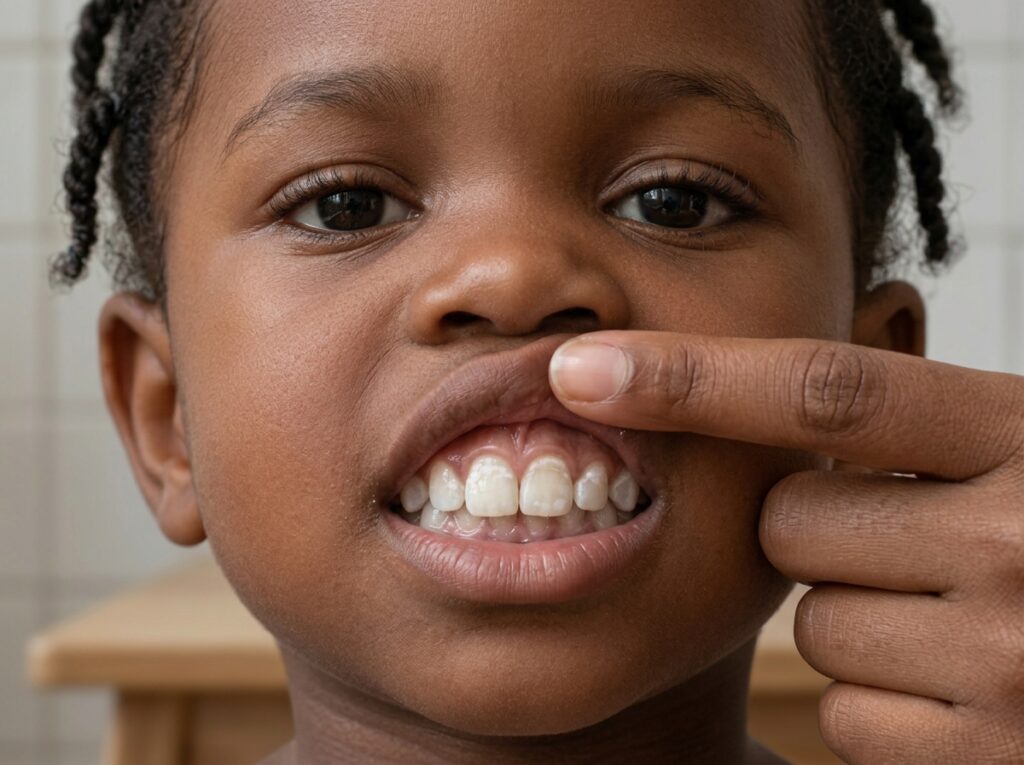
Early decay is easy to miss, particularly on the back teeth. Once a week, lift your child’s upper lip in good light and look for the following signs.
1. Chalky White Lines Near the Gums
The first sign is often a dull, chalky white band along the gum line of the upper front teeth. At this stage, the enamel has lost minerals but has not yet broken. This is the best time to act, because early white-spot damage can often be reversed with fluoride and better habits.
2. Yellow, Brown or Black Spots
As decay progresses, the white areas turn yellow or light brown, and later dark brown or black. Stains in the grooves of the back teeth deserve a check too, since decay often starts there.
3. Small Holes or Chipped Edges
Once the surface collapses, you may see a pit or hole. Front teeth may also look chipped or worn near the gum line.
4. Sensitivity to Sweet, Hot or Cold Foods
A child who winces when eating sweets, drinking cold milk or eating warm porridge may have decay that has reached the softer layer beneath the enamel.
5. Refusing Food or Chewing on One Side
Young children rarely say “my tooth hurts”. Instead, they may push food away, chew on one side or become fussy at mealtimes. Because these changes can look like teething in younger babies, our guide to teething in babies can help you tell the difference.
6. Persistent Bad Breath
Breath that stays unpleasant even after brushing can point to trapped food and bacteria in decayed teeth.
7. Swelling or a Pimple on the Gum
A small swelling, boil or pus-filled bump on the gum above a tooth suggests infection has reached the root. This needs prompt attention, since the infection can spread and cause facial swelling, fever or disturbed sleep.
What Causes Tooth Decay in Young Children?
How Often Sugar Touches the Teeth
It is not only how much sugar your child eats that matters, but how often. Each sweet snack or sugary drink triggers an acid attack that lasts well beyond the last bite. Frequent grazing on biscuits, sweets, juice or sweetened drinks therefore keeps the teeth under near-constant attack.⁴
The Sweet Tea Habit
For many Kenyan families, sweet tea is part of daily life, and toddlers often share it. A 2026 study of 7,459 children under two, based on the 2022 Kenya Demographic and Health Survey, found that one in five (21%) had eaten or drunk something sugary in the previous day or night.³
Exposure climbed sharply with age, from 3.3% of babies under six months to 31.2% of children aged 12 to 23 months.³ The most common sources were sweetened tea or coffee, sweetened milk, and fried or sugary snacks.³
Interestingly, children from the wealthiest households had about twice the odds of sugary diet exposure compared with the poorest, while children who were still breastfeeding had lower odds.³ In short, busy urban families are not automatically protected.
Night Feeds and Bottles
Falling asleep with a bottle of milk, tea or juice lets sugary liquid pool around the teeth for hours, just when saliva flow is at its lowest. Breast milk on its own is not the main culprit. Even so, frequent night-time feeding from the second year of life, especially alongside other sugary foods, may raise the risk of decay.⁴
Missing Fluoride and Irregular Brushing
Fluoride strengthens enamel and helps early damage repair itself. Consequently, children who are not brushed twice a day with fluoride toothpaste miss out on this protection.⁴
Bacteria Passed from Parents
The bacteria behind decay can pass from a parent or caregiver to a child.⁴ Looking after your own teeth, and avoiding habits such as sharing spoons or cleaning a dummy in your mouth, helps reduce this.
Why Tooth Decay in Baby Teeth Still Matters
“They will fall out anyway” is one of the most common things children’s dentists hear. Unfortunately, baby teeth do important work until they are replaced, and some back baby teeth stay in place until around the age of 10 to 12.
Untreated decay can cause pain, infection and emergency visits. It can also disturb eating and sleep, lower quality of life and lead to missed school days.⁴ Furthermore, children who develop ECC face a higher risk of new decay in both their baby teeth and the adult teeth that follow.⁴
Early loss of a baby tooth can also let neighbouring teeth drift into the gap, which may crowd the adult tooth waiting underneath. You can read more about normal tooth loss in our guide to a loose baby tooth.
How to Prevent Tooth Decay in Children at Home
Prevention is far simpler than treatment, and most of it happens at home.⁴
Start Before the First Tooth
A few days after birth, gently wipe your baby’s gums once a day with a clean, damp gauze pad or soft cloth.⁴ This builds the routine early.
Brush Twice a Day with the Right Amount of Fluoride Toothpaste
Begin brushing twice a day as soon as the first tooth appears.⁴ For children under three, use only a smear of fluoride toothpaste, about the size of a grain of rice. From three to six years, use a pea-sized amount.⁴
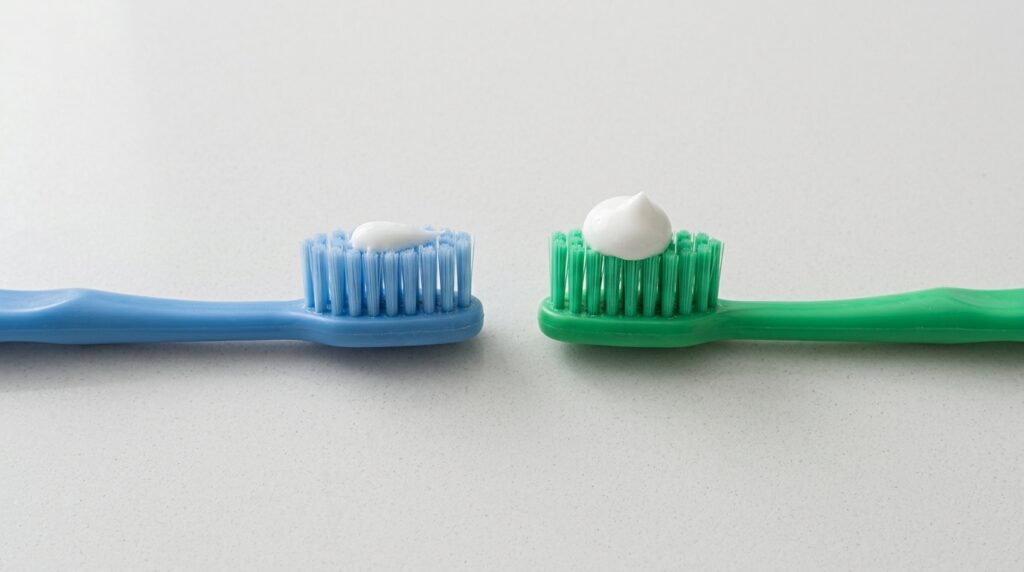
Afterwards, encourage your child to spit out the excess rather than rinse with water, so the fluoride stays on the teeth for longer.⁴ Most children cannot brush thoroughly on their own until around seven or eight, so brush for them or check their teeth after they finish.
Keep Sugar to Mealtimes
Limit sweets, biscuits and sugary drinks, and offer them with meals rather than as snacks in between.⁴ Plain water and plain milk are the best everyday drinks, so try to delay sweetened tea for as long as you can. For more practical ideas, see our 7 everyday food rules for healthy teeth in children.
Put the Bottle Away at Bedtime
Avoid putting your child to bed with a bottle of milk or any sugary drink.⁴ If they need a bottle to settle, fill it with plain water instead. After the last feed of the day, wipe or brush the teeth.
Book an Early Dental Visit
A first dental check-up should happen after the first tooth appears and no later than the first birthday.⁴ After that, check-ups every three to six months let the dentist assess your child’s risk and catch problems early.⁴
If you are unsure when to start, our guide on when your child should first see a dentist explains the timeline. Our tips on preparing your child for their first dental visit can also make the day easier.
How Dentists Treat Tooth Decay in Children
Treatment depends on how deep the decay is, your child’s age and how comfortable they are in the dental chair. Modern children’s dentistry leans towards gentle, minimally invasive care wherever possible.⁴
Fluoride Varnish
Fluoride varnish is painted onto the teeth in seconds. It helps harden early white-spot damage and protects healthy enamel. Children at high risk usually benefit from varnish every three months, while those at moderate risk may need it twice a year.⁴
Silver Diamine Fluoride
For cavities in baby teeth, a 38% silver diamine fluoride liquid can be applied to the decayed area to help stop it progressing.⁴ It needs no drilling, which makes it useful for very young or anxious children. Ask your dentist to explain how it may change the appearance of treated teeth.
Fissure Sealants
Sealants are thin protective coatings placed in the deep grooves of back teeth. They are commonly recommended for baby molars at around three to four years, and for the first adult molars at around six to eight years.⁴
Fillings
Where a cavity has formed, the dentist removes the decay and restores the tooth with a tooth-coloured material such as glass ionomer or composite resin.⁴ Glass ionomer releases fluoride slowly, which helps protect the surrounding tooth.⁴
Crowns for Baby Teeth
Back baby teeth with large or multiple cavities may need a preformed metal crown that covers the whole tooth.⁴ In one approach, known as the Hall technique, the crown is fitted over the decayed tooth without drilling, which seals the decay away from the sugars that feed it.⁴ Decayed front baby teeth, on the other hand, can be rebuilt with tooth-coloured strip crowns.⁴
A 2021 Cochrane review of 27 clinical trials compared different ways of treating cavities. For baby teeth, it found that less invasive options, such as removing only the softest decay or sealing it under a Hall crown, may fail less often than complete decay removal followed by a filling. However, the certainty of that evidence was low.⁵
Treating the Nerve
When decay comes close to the nerve, the dentist may leave the deepest layer undisturbed, place a protective lining and seal the tooth. Alternatively, they may carry out a pulpotomy, which removes the inflamed top portion of the nerve and preserves the rest.⁴ Both treatments aim to keep the baby tooth in place until its adult replacement is ready.⁴
Extraction
If a tooth is too badly damaged or infected to save, removing it may be the kindest option. Your dentist will then discuss whether anything is needed to hold the space for the adult tooth.
When to See a Dentist Urgently
Book an appointment soon if you notice white or brown patches, visible holes, or your child complains of pain when eating. Seek same-day care if there is facial swelling, a gum boil, fever with tooth pain, or pain that keeps your child awake at night. Our emergency dental care page explains what to do in the meantime.
Protecting Your Child’s Smile
Tooth decay in children is common, but it is not inevitable. Twice-daily brushing with the right amount of fluoride toothpaste, fewer sugary snacks and drinks, no sugary bottles at bedtime and regular check-ups all make a real difference. The earlier decay is spotted, the simpler and gentler treatment tends to be. If you have noticed any of the signs above, or your child has never had a dental check-up, the team at DentMind CBD Dental Centre on Kimathi Street would be glad to see you both. You can book an appointment online or message us on WhatsApp to find a time that suits your family.
References
¹ Maklennan, A., Borg-Bartolo, R., Wierichs, R. J., Esteves-Oliveira, M., & Campus, G. (2024). A systematic review and meta-analysis on early-childhood-caries global data. BMC Oral Health, 24, 835. https://doi.org/10.1186/s12903-024-04605-y
² Kimmie-Dhansay, F., Nkambule, N. R., Schoonraad, N., Albougy, H., & Bhayat, A. (2026). Prevalence of early childhood caries in Africa: A systematic review. International Journal of Paediatric Dentistry, 36(1), 157-186. https://doi.org/10.1111/ipd.70038
³ Gichuki, J., Mategula, D., Gichuki, R., & Muriuki, P. J. (2026). Prevalence, patterns, and factors associated with early childhood cariogenic diet exposure in Kenya. BMC Oral Health, 26, 1555. https://doi.org/10.1186/s12903-026-08793-7
⁴ Zou, J., Du, Q., Ge, L., Wang, J., Wang, X., Li, Y., Song, G., Zhao, W., Chen, X., Jiang, B., Mei, Y., Huang, Y., Deng, S., Zhang, H., Li, Y., & Zhou, X. (2022). Expert consensus on early childhood caries management. International Journal of Oral Science, 14, 35. https://doi.org/10.1038/s41368-022-00186-0
⁵ Schwendicke, F., Walsh, T., Lamont, T., Al-yaseen, W., Bjørndal, L., Clarkson, J. E., Fontana, M., Gomez Rossi, J., Göstemeyer, G., Levey, C., Müller, A., Ricketts, D., Robertson, M., Santamaria, R. M., & Innes, N. P. T. (2021). Interventions for treating cavitated or dentine carious lesions. Cochrane Database of Systematic Reviews, 2021(7), CD013039. https://doi.org/10.1002/14651858.CD013039.pub2