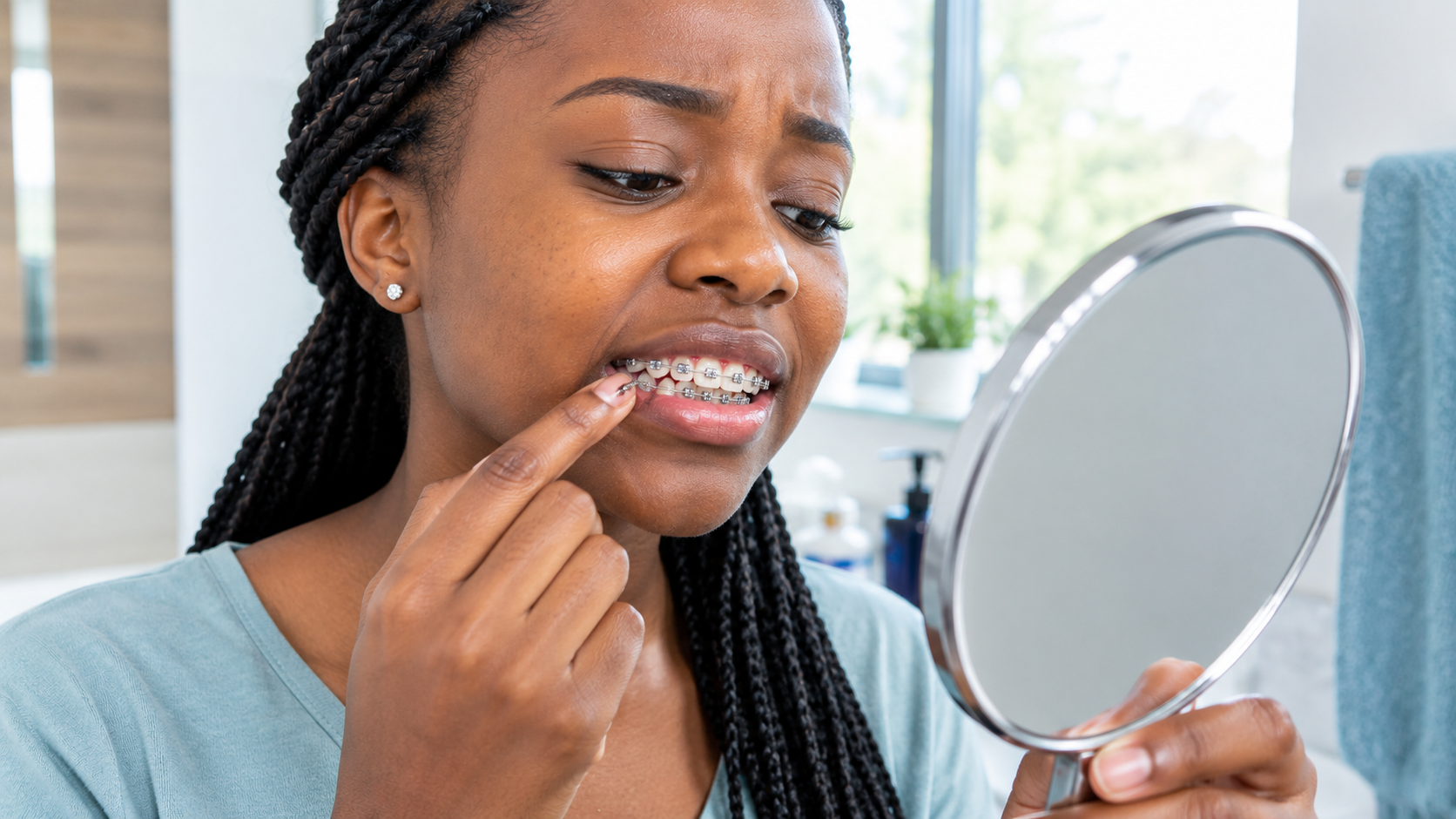
Broken braces in Nairobi rarely happen at a convenient time. A bracket pops off while you are eating lunch in town, or a wire starts digging into your cheek just as you settle down for the night. Suddenly, something that was quietly doing its job becomes the only thing you can think about.
The good news is that most braces problems are not true emergencies. They are uncomfortable and annoying, but they can usually be managed at home for a short while until you see a dentist. In fact, a problem with a fixed brace is the most common reason people with braces need urgent dental help.¹
This guide explains what to do about a loose bracket or a poking wire, which quick fixes are safe, what you should never try, and how to tell when you need to be seen straight away.
Is a Broken Bracket an Emergency?
In most cases, no. A bracket that has come loose or a wire that is rubbing your cheek needs attention, but it can normally wait a day or two while you make yourself comfortable.
A study of orthodontic patients at a teaching hospital found that a broken or loose bracket was the most common problem, reported by 55.6% of patients, followed by a long, poking wire at 35.2%. The same study found a strong link between these problems and pain levels, and more than half of the patients chose to wait for their next scheduled appointment rather than seek care immediately.²
Waiting is often reasonable. However, a few situations need same-day attention, and some need a hospital rather than a dentist. These are covered later in this guide under red flags.
Why Braces Break in the First Place
It helps to know that a broken bracket is not usually a sign that you did something wrong. Brackets are bonded to the teeth with a special adhesive, and that bond is designed to be strong enough to move teeth but still removable at the end of treatment.
A large study of patients wearing fixed braces found that 14.65% of brackets came loose at some point, and 78% of patients had at least one bracket fail during treatment.³ In other words, most people with braces will deal with this at least once.
The same study found some useful patterns:
- Brackets in the lower jaw failed about twice as often as those in the upper jaw.
- Back teeth were more likely to lose a bracket than front teeth.
- More than half of all failures happened in the first year, with a peak in the first month of treatment.
- Patients aged 20 and under had a higher failure rate.³
A systematic review of bonding methods also showed that failure rates vary with the technique and materials used, which explains why some people seem to have more breakages than others.⁴
Everyday habits play a big part too. Biting into hard foods such as roasted maize, bones, nuts and ice, chewing sticky sweets, or using your teeth to open bottles and packets can all knock a bracket loose or bend a wire.
How Common Are Braces Emergencies?
Very common. A large review of emergency visits at a university orthodontic clinic looked at more than 3,500 urgent appointments. Problems with full fixed braces and fixed retainers were the most frequent causes, and most emergencies happened during active treatment rather than afterwards.⁵
So if you are dealing with broken braces in Nairobi right now, you are far from alone, and the fix is usually quick once you are in the chair.
Quick Fixes for a Loose or Broken Bracket
What you should do depends on what the bracket is doing.
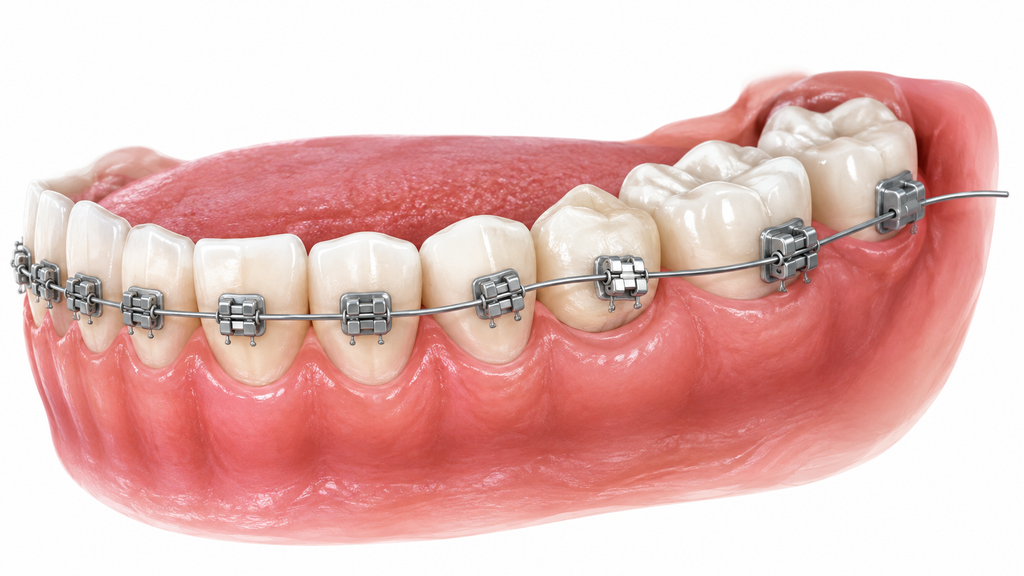
The Bracket Is Loose but Still on the Wire
This is the most common situation. The bracket has come away from the tooth but is still threaded on the wire, so it may slide or spin.
- Leave it in place if it is not bothering you. Do not try to pull it off.
- Cover it with orthodontic wax if it rubs your lip or cheek (see the step-by-step guide below).
- If it has spun round, you can gently slide it back into position between two teeth using clean fingers or a clean cotton bud, so the smooth side faces your cheek.
- Book a repair visit. The bracket needs to be re-bonded so your teeth keep moving as planned.
The Bracket Has Come Off Completely
If the bracket has fallen off the wire entirely, keep it in a small clean bag or container and bring it with you to your appointment. Rinse your mouth and check that no other parts are loose.
The Back Band or Tube Is Loose
The metal bands or tubes on your back teeth hold the end of the wire. If one comes loose, the wire end may start to stick out and catch your cheek. Cover any sharp area with wax and arrange to be seen soon, because a loose back band can trap food against the tooth.
Quick Fixes for a Poking or Long Wire
A wire that pokes into your cheek, tongue or gum is one of the most uncomfortable braces problems. It often happens as your teeth move, because the wire slides through the brackets and the end starts to stick out at the back.
Practical guidance for dentists notes that the first step is to work out why the wire has become sharp, and that wax is enough for mild cases, while a longer wire needs the end trimmed with special cutters.¹ Here is what you can safely do at home:
- Apply orthodontic wax over the end of the wire. This is the simplest and safest fix.
- Tuck in a thin tie wire. If the poking part is one of the thin wires that hold the main wire to a bracket, you can gently push it flat against the bracket with the rubber end of a clean pencil or a cotton bud.
- Move a sliding wire gently. Sometimes the main wire has shifted to one side. Using clean tweezers, you may be able to slide it back slightly so the sharp end on one side becomes shorter. Stop if it does not move easily.
- Use a small piece of clean cotton wool or sugar-free gum as a temporary cushion if you have no wax at all.
Avoid trying to cut the wire yourself unless your dentist or orthodontist has guided you through it. A clipped wire end can be swallowed or inhaled, and an uneven cut can leave an even sharper edge. A dentist will trim and smooth it in minutes.
How to Use Orthodontic Wax Properly
Orthodontic wax is the most useful item to keep at home, in your bag and at the office while you have braces. Pharmacies and dental clinics usually stock it.
- Wash your hands and rinse your mouth.
- Dry the area with a tissue or cotton bud. Wax sticks poorly to wet surfaces.
- Pinch off a small piece about the size of a pea.
- Roll it into a ball between your fingers until it is soft and warm.
- Press it firmly over the bracket or wire end that is causing the problem, moulding it so it covers the sharp part completely.
- Replace it as needed. Remove it before brushing and put fresh wax on afterwards. Swallowing a small piece by accident is not harmful.
Dealing With Mouth Ulcers and Sore Cheeks
When a bracket or wire rubs the same spot again and again, the inside of the cheek or lip can develop a painful ulcer. This is very common. In a study of 587 patients having orthodontic treatment, about half developed mouth ulcers at some point.⁶
To help ulcers heal and prevent new ones:
- Cover the cause with wax so the area can rest.
- Rinse with warm salt water a few times a day.
- Use a soft toothbrush. The same study found that using a hard toothbrush was linked to a higher chance of ulcers, and so was smoking.⁶
- Avoid very hot, spicy or acidic food until the area settles.
- Ask a pharmacist about a protective mouth gel if eating is painful.
Most braces ulcers heal within a week or two once the cause is covered or fixed. However, an ulcer that has not healed after two weeks should always be checked by a dentist.
What About a Broken Fixed Retainer?
After braces come off, many people have a thin wire bonded behind the front teeth to stop them moving back. These retainers can also come loose, and they are one of the most frequent reasons for orthodontic emergency visits.⁵
If part of your fixed retainer comes away, do not pull it off or bend it back yourself. Cover any sharp end with wax and book a visit soon. Teeth can start to shift surprisingly quickly once a retainer stops holding them, so it is worth acting within days rather than weeks.
What Not to Do
When braces break, it is tempting to try a quick home repair. Some of these do more harm than good.
- Do not use superglue or any household glue on a bracket. It is not safe for use in the mouth and can damage the tooth surface.
- Do not pull off a loose bracket or band that is still attached to the wire.
- Do not bend the main wire with pliers or your fingers.
- Do not cut wires with household scissors or blunt tools.
- Do not ignore it for weeks. A broken bracket means that tooth is no longer being moved correctly, which can lengthen your overall treatment.
Red Flags: When Broken Braces Need Urgent Care
Most braces problems can wait a short while. The following cannot:
- A wire stuck into your cheek or gum that you cannot free or cover, especially if it is bleeding or causing severe pain.
- A swallowed piece of brace that leaves you coughing, wheezing or short of breath. This may mean it has gone into the airway rather than the stomach. Go to the nearest hospital emergency department immediately.
- A blow to the face or mouth during sport, a fall or a road accident that has loosened teeth or damaged the brace. Our guide to what to do about a broken tooth covers dental injuries in more detail.
- Swelling of the face or gum, fever, or pus around a tooth with a band or bracket, which may signal infection.
- Severe pain that painkillers do not ease.
If you swallow a small piece and feel completely fine, with no coughing or breathing difficulty, it will usually pass naturally. Even so, let your dentist know at your next visit so they can check what is missing.
How Quickly Should You See a Dentist?
As a simple guide:
- Same day: any red flag above, or a wire you cannot make comfortable.
- Within a few days: a loose bracket, a loose back band, or a wire that is comfortable with wax.
- At your next planned appointment, after calling ahead: a single loose bracket that is not causing discomfort, if your dentist agrees this is safe.
Always let the clinic know what has broken when you book. This allows the team to set aside enough time for the repair.
Preventing Broken Braces
You cannot prevent every breakage, but a few habits make a big difference:
- Cut food into small pieces and chew with your back teeth rather than biting into hard items.
- Avoid hard and sticky foods such as roasted maize on the cob, hard sweets, toffee, chewing gum, ice and bones.
- Do not chew pens, nails or bottle tops.
- Wear a mouthguard for contact sports such as football, rugby and basketball.
- Use a soft toothbrush and brush gently around each bracket.
- Keep wax with you at all times.
If you are thinking about treatment or are already wearing braces as an adult, our guide to adult braces in Nairobi explains what to expect.
Final Word on Broken Braces
A loose bracket or poking wire can make every meal and conversation uncomfortable, but it is almost always simple to fix. Cover sharp edges with wax, keep any loose pieces, avoid home repairs with glue or scissors, and watch for the red flags that mean you need to be seen the same day. If you are dealing with broken braces in Nairobi, the team at DentMind CBD Dental Centre on Kimathi Street can see you quickly to make your braces safe and comfortable and advise on the next steps for your treatment. You can book online, message us on WhatsApp or call 0715 063640, and you can read more about our emergency dental care in Nairobi CBD before you visit.
For general background on braces and orthodontic treatment, see the NHS guide to orthodontics.
This article is for general information and DOES NOT REPLACE a professional dental or medical assessment. If you swallow part of your brace and have any coughing, wheezing or difficulty breathing, go to the nearest hospital emergency department immediately.
References
¹ Deans, J., McColl, E., & Hamilton, S. (2023). Top tips for managing orthodontic emergencies in primary care. British Dental Journal, 235(4), 236-239. https://doi.org/10.1038/s41415-023-6265-z
² Al-Fadhily, Z., Mohammed, D., Hammed, H., & Alhuwaizi, A. (2022). The effect of COVID-19 on emergencies and pain among orthodontic patients attending a teaching hospital. Journal of Medicine and Life, 15(10), 1267. https://doi.org/10.25122/jml-2022-0208
³ Jakavičė, R., Kubiliūtė, K., & Smailienė, D. (2023). Bracket bond failures: Incidence and association with different risk factors. A retrospective study. International Journal of Environmental Research and Public Health, 20(5), 4452. https://doi.org/10.3390/ijerph20054452
⁴ Dudás, C., Czumbel, L. M., Kiss, S., Gede, N., Hegyi, P., Mártha, K., & Varga, G. (2023). Clinical bracket failure rates between different bonding techniques: A systematic review and meta-analysis. European Journal of Orthodontics, 45(2), 175-185. https://doi.org/10.1093/ejo/cjac050
⁵ Vårum, V. B., Vandevska-Radunovic, V., & Pullisaar, H. (2026). Orthodontic emergencies in a postgraduate clinic: A retrospective analysis. Acta Odontologica Scandinavica, 85, 568-574. https://doi.org/10.2340/aos.v85.46620
⁶ Chang, J., & Li, X. (2024). Multivariate analysis of oral mucosal ulcers during orthodontic treatment. World Journal of Clinical Cases, 12(26), 5868-5876. https://doi.org/10.12998/wjcc.v12.i26.5868