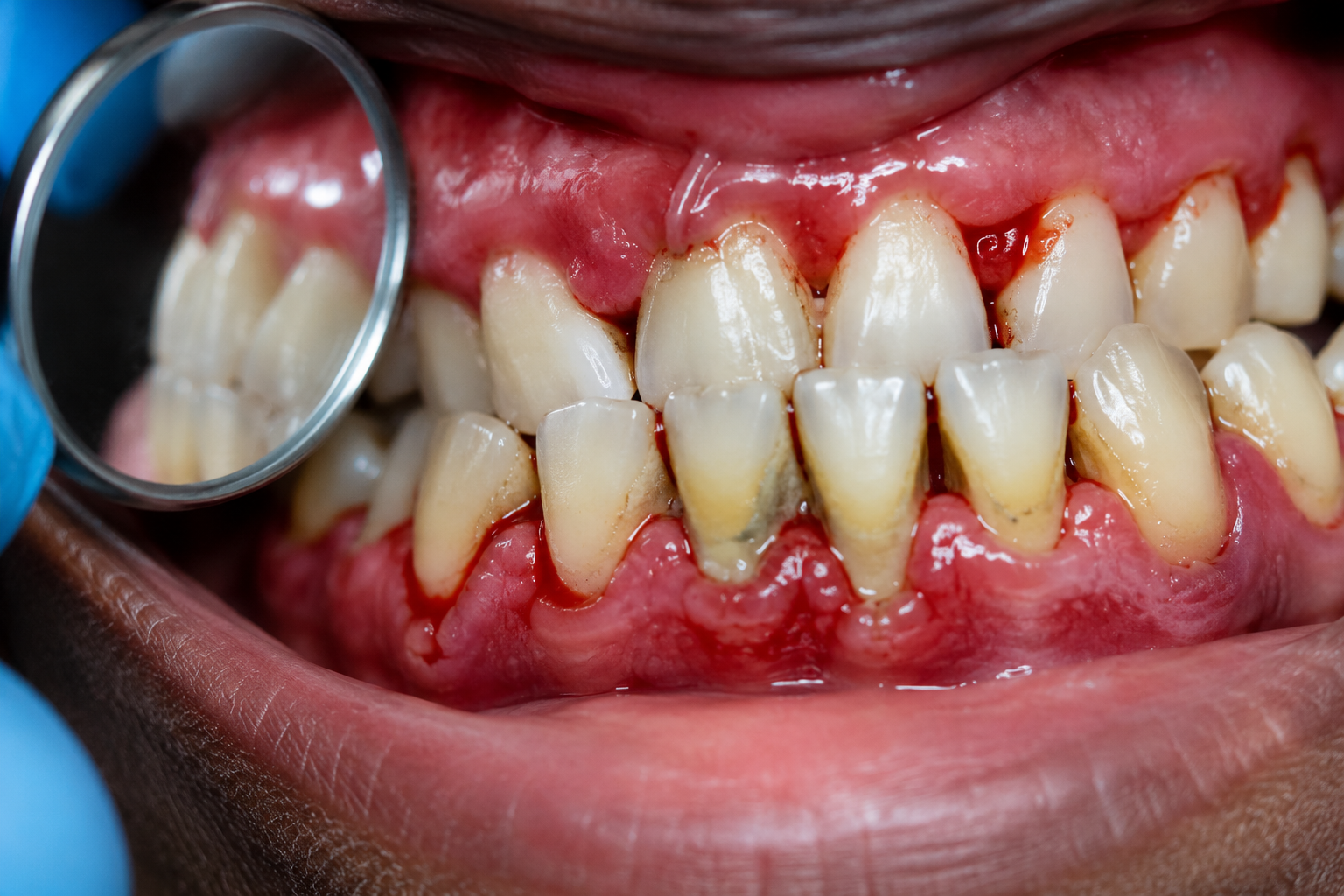
Living with diabetes means managing a condition that touches nearly every system in the body. Most people know about the risk of kidney disease, nerve damage, and cardiovascular complications. Fewer people realise that the mouth is also deeply involved, and that the relationship between diabetes and oral health runs in both directions. Poorly controlled blood sugar damages gum tissue and accelerates tooth loss. At the same time, untreated gum disease can make blood sugar harder to control. Understanding this two-way connection is not just interesting science; it is practically useful information that can change how you manage your health.
How Common Is the Problem?
The numbers are striking. Research published in the third edition of Diabetes in America found that among U.S. adults with diagnosed diabetes, those with moderate to severe periodontitis had nearly double the rate of poorly controlled blood sugar compared to those with little or no gum disease. Specifically, 27.5% of adults with moderate or severe periodontitis had an HbA1c above 8%, compared to only 14.7% of those with mild or no periodontal disease.¹ These figures come from nationally representative health data and reflect a pattern that researchers across multiple continents have observed consistently.
Globally, the burden is substantial. An estimated 463 million adults were living with diabetes as of 2019, with projections suggesting 700 million by 2045.³ At the same time, periodontitis affects approximately 42% of dentate adults in the United States alone and ranks as the twelfth most prevalent disease worldwide, with severe periodontitis affecting around one in nine adults.³ Because both conditions are so common, and because they share the same underlying risk factors such as smoking, obesity, poor diet, and chronic inflammation, they frequently occur together in the same person.
The Bidirectional Relationship: How Each Condition Worsens the Other
The relationship between diabetes and gum disease is often described as bidirectional, meaning each condition independently worsens the other. This is not a theoretical claim; it is supported by decades of population-based research, randomised controlled trials, and mechanistic studies.
How diabetes damages the gums
Elevated blood glucose levels trigger a cascade of harmful processes in the oral tissues. The body produces advanced glycation end-products (AGEs) when glucose binds to proteins in an uncontrolled way. These AGEs interact with receptors known as RAGE, activating inflammatory pathways that cause immune cells to overproduce destructive cytokines including TNF-alpha, IL-1 beta, and IL-6.⁴ This hyperinflammatory response causes gum tissue to break down faster, deepens the pockets between teeth and gums, and interferes with the bone repair mechanisms that would normally limit damage. People with poorly controlled diabetes, particularly those with HbA1c above 9%, have been found to have almost three times the odds of severe periodontitis compared to people without diabetes.¹
Diabetes also impairs neutrophil function, which is the body’s frontline cellular defence against oral bacteria. With defective neutrophil adherence, chemotaxis, and phagocytosis, bacteria in the dental plaque are less efficiently cleared, allowing the periodontal biofilm to persist and the inflammatory injury to continue.⁴ Additionally, hyperglycemia causes microvascular changes and delayed wound healing, which means that even routine gum damage takes longer to repair and is more likely to progress.
A comprehensive narrative review in Diabetes, Metabolic Syndrome and Obesity noted that the prevalence rate of periodontitis among diabetic patients ranges from 34% to 68%, and that compared to healthy individuals, people with uncontrolled diabetes have an eleven-times greater risk of losing alveolar bone, the bone that anchors the teeth in place.⁴
How gum disease worsens diabetes
The reverse pathway is equally important. The inflamed periodontium acts as a chronic source of bacteria, bacterial endotoxins, and inflammatory mediators that spill into the bloodstream. This systemic inflammatory load contributes to insulin resistance by activating inflammatory signalling pathways that interfere with insulin receptor function and promote pancreatic beta cell damage.⁴ In practical terms, untreated periodontitis can raise HbA1c levels and make blood glucose harder to control even in patients who are otherwise compliant with their diabetes medication and diet.
A prospective German cohort study involving over 2,300 initially diabetes-free adults found that people with the poorest baseline periodontal health had a fivefold greater increase in HbA1c levels over five years compared to those with the healthiest periodontium.¹ Longitudinal data from Japanese studies have shown that people with more severe periodontitis are significantly more likely to develop impaired glucose tolerance and eventually type 2 diabetes. One study reported that those in the most severe periodontitis category had more than double the odds of experiencing clinically meaningful HbA1c increases over a ten-year follow-up period.¹

The Role of Inflammation: C-Reactive Protein as the Connecting Thread
A significant body of research has examined C-reactive protein (CRP), a standard blood marker of systemic inflammation, as the mechanistic link between oral disease and diabetes. A study published in the International Dental Journal, using data from the 2009 to 2010 National Health and Nutrition Examination Survey, found that among adults aged 50 and older, significant tooth loss was associated with substantially higher odds of elevated CRP. Participants with both significant tooth loss and diabetes had an adjusted odds ratio of 1.92 for elevated CRP compared to those with neither condition, while those with significant tooth loss alone had an odds ratio of 2.30.²
The same study found that dental flossing significantly mediated this relationship. People with poor oral health and diabetes who flossed more regularly had measurably lower systemic inflammation. Each additional day of flossing in the past week was associated with a 8 to 9% reduction in the odds of having elevated CRP.² This finding has direct practical implications: consistent oral hygiene is not just cosmetically important but physiologically relevant to managing the chronic inflammation that drives both periodontal disease and diabetic complications.
Beyond Gum Disease: The Full Spectrum of Oral Complications
Gum disease receives the most research attention, but diabetes produces a wide range of oral complications that patients and clinicians should recognise.
Dry mouth (xerostomia and hyposalivation)
Saliva is a critical protective fluid. It buffers acids, washes away food debris, contains antimicrobial proteins, and helps remineralise early tooth decay. Diabetes disrupts the autonomic nerve supply to salivary glands and can cause structural changes that reduce saliva production. A meta-analysis of 32 studies found that xerostomia, the subjective feeling of mouth dryness, affected 46% of diabetic patients, while another study reported that 92.5% of diabetic patients had reduced salivary flow.⁴
Reduced saliva raises the risk of dental caries, periodontal disease, oral candidiasis, and difficulty speaking, eating, and swallowing. It also worsens quality of life in ways that are often underestimated by medical care providers.
Dental caries
The mechanism is straightforward: microvasculature damage in diabetes causes glucose to leak from salivary duct cells, raising glucose levels in saliva and the crevicular fluid around the gums. Dental plaque bacteria convert this glucose into lactic acid, lowering salivary pH. The acidic environment favours the growth of acidogenic bacteria and suppresses protective oral bacteria, creating conditions where caries develop and progress rapidly.⁴ Root caries in particular are more prevalent in older adults with type 2 diabetes than in their non-diabetic peers.
Oral candidiasis (thrush)
Candida albicans is a commensal yeast in the oral microbiome. In normal circumstances it causes no harm. In people with poorly controlled diabetes, elevated oral glucose levels and impaired immune function allow Candida to overgrow, producing white patches, redness, soreness, and denture stomatitis. Diabetes is an independent predictor of oral candidiasis, and the risk is particularly elevated in people who also have xerostomia.³
Burning mouth syndrome and taste disturbances
Diabetic neuropathy affects the nerves that control taste sensation and the somatosensory function of the oral cavity. Studies have consistently shown that the ability to distinguish and recognise taste sensations is reduced in both type 1 and type 2 diabetes. Burning mouth syndrome, characterised by chronic burning or tingling in the oral mucosa without any visible lesion, has been observed in 18.8% of type 2 diabetic patients with peripheral neuropathy.⁴ Both conditions affect nutritional choices, quality of life, and the patient’s ability to maintain adequate oral hygiene.
Tooth loss
Severe periodontitis is a leading cause of tooth loss in adults, and the association with diabetes is well-established. U.S. national survey data spanning four decades found that people with diabetes were missing almost twice as many teeth as their non-diabetic counterparts.¹ Poorly controlled diabetes more than doubles the risk of having more than nine missing teeth compared to people with normal blood glucose levels.³
What is less appreciated is that tooth loss itself worsens diabetes management. When patients lose teeth or develop painful tooth sensitivity, they struggle to chew fibrous foods and fresh vegetables. They compensate with soft, highly processed foods with high glycemic index scores, which directly undermines dietary glucose control.³ Tooth loss is therefore not just an outcome of uncontrolled diabetes; it is a contributor to it.
Other oral manifestations
Borgnakke and Poudel (2021) reviewed additional oral conditions associated with hyperglycemia including fissured tongue, benign migratory glossitis (geographic tongue), melanin pigmentation, traumatic ulcers, delayed wound healing, and temporomandibular disorders.³ The oral cancer risk is also elevated, with diabetes associated with a 4.3-fold greater risk of developing oral cancer and a 2.1-fold greater risk of oral cancer mortality compared to non-diabetic individuals.³ These figures underscore that the oral consequences of diabetes extend well beyond the gums and teeth.
Can Dental Treatment Improve Diabetes Control?
This is one of the most clinically significant questions in this field, and the evidence is increasingly affirmative. Multiple systematic reviews and meta-analyses have examined whether non-surgical periodontal treatment, consisting of scaling and root planing (“deep cleaning”), oral hygiene instruction, and maintenance visits, can lower HbA1c levels in people with type 2 diabetes.
A summary of 17 such meta-analyses published in Frontiers in Dental Medicine found statistically significant HbA1c reductions across the majority of high-quality analyses, with pooled improvements ranging from 0.27 to 0.65 percentage points.³ This magnitude of glycemic improvement is clinically meaningful; it is comparable in scale to adding a second oral antidiabetic medication to metformin, which typically produces reductions of 0.5 to 2.5 percentage points.¹
A large prospective cohort study of 126,805 people with type 2 diabetes who received periodontal treatment within the U.S. Veterans Administration health system found that treatment increased the likelihood of reaching HbA1c targets below 7% or below 9%. The greatest absolute benefit of 0.25% HbA1c reduction was seen in patients who started with the worst glycemic control, with baseline HbA1c above 9%.¹
These findings do not mean that dental treatment can replace diabetes medication. They suggest that managing periodontal disease is a legitimate and underutilised component of comprehensive diabetes management, one that reduces the systemic inflammatory burden that contributes to insulin resistance.
What Should Diabetic Patients Do?
The evidence points to a clear and actionable set of recommendations.
Visit your dentist regularly, and tell them you have diabetes. Dentists need to know your HbA1c levels to understand the degree of glycemic control and adjust treatment planning accordingly. Some dental procedures carry a higher risk of infection or impaired healing in poorly controlled diabetes, and your dental team needs this information to provide safe care.
Prioritise gum health as part of your diabetes management plan. Periodontitis is not a cosmetic problem. It is a chronic infection with systemic consequences. Scaling and root planing, when indicated, should be treated with the same seriousness as medication adjustments.
Maintain meticulous oral hygiene at home. The NHANES data analysed by Luo and colleagues (2022) found that flossing independently reduced the risk of elevated systemic inflammation regardless of whether the patient also had periodontitis or diabetes.² Brush twice daily, floss or use interdental brushes daily, and use fluoride toothpaste.
Address dry mouth proactively. If you are experiencing mouth dryness, speak to your doctor about whether any of your medications are contributing, stay well hydrated, and use saliva substitutes or mouth rinses formulated for dry mouth if necessary. Do not ignore dry mouth; it significantly accelerates tooth decay.
Do not delay dental visits when you notice symptoms. Bleeding gums, loose teeth, persistent mouth sores, a burning sensation, or changes in taste sensation are all signals that require professional evaluation. In people with diabetes, these symptoms can deteriorate quickly.

The Case for Integrated Care
Research strongly supports the integration of dental care into diabetes management pathways. Borgnakke and Poudel (2021) argue that the evidence is already sufficient to act, and that what is needed is a paradigm shift in which all health professionals, including physicians, nurses, dietitians, and dentists, approach patients with hyperglycemia as a shared responsibility.³ The dental office can be an important site for identifying undiagnosed diabetes and prediabetes, particularly because many people with these conditions are unaware of their status. Periodontitis, few remaining teeth, and recurrent periapical abscesses can all serve as clinical signs that prompt a diabetes referral.
The financial case for integration is also being made. Studies from Germany, Japan, the Netherlands, and the United Kingdom have found that periodontal treatment reduces overall medical care costs, hospitalisations, and diabetes-related complications in insured populations.³ Prevention and early treatment of gum disease may therefore reduce the economic burden that falls on patients and health systems managing diabetes and its complications.
At DentMind CBD Dental Centre on Victor House, Third Floor, Kimathi Street in Nairobi CBD, we treat patients as whole people. If you are living with diabetes and have not had a dental examination recently, or if you have noticed bleeding gums, mouth dryness, tooth sensitivity, or other oral changes, we encourage you to book an appointment. Our team is equipped to provide comprehensive periodontal assessment, professional cleaning, and personalised oral hygiene guidance tailored to patients managing chronic health conditions. Taking care of your mouth is an investment in your overall metabolic health, and we are here to support you in that process.
Footnotes
¹ Borgnakke, W. S., Genco, R. J., Eke, P. I., & Taylor, G. W. (2018). Oral health and diabetes. In Diabetes in America (3rd ed.). National Institute of Diabetes and Digestive and Kidney Diseases. PMID: 33651538.
² Luo, H., Wu, B., Kamer, A. R., Adhikari, S., Sloan, F., Plassman, B. L., Tan, C., Qi, X., & Schwartz, M. D. (2022). Oral health, diabetes, and inflammation: Effects of oral hygiene behaviour. International Dental Journal, 72(4), 484–490. https://doi.org/10.1016/j.identj.2021.10.001
³ Borgnakke, W. S., & Poudel, P. (2021). Diabetes and oral health: Summary of current scientific evidence for why transdisciplinary collaboration is needed. Frontiers in Dental Medicine, 2, 709831. https://doi.org/10.3389/fdmed.2021.709831
⁴ Ahmad, R., & Haque, M. (2021). Oral health messiers: Diabetes mellitus relevance. Diabetes, Metabolic Syndrome and Obesity: Targets and Therapy, 14, 3001–3015. https://doi.org/10.2147/DMSO.S318972