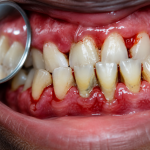
Most people who have gum disease do not know it. That is not an exaggeration. Research involving patients who were clinically diagnosed with gum disease found that a significant number reported having no symptoms at all, even when bleeding, inflammation, and pocketing were clearly present during examination.² Gum disease moves quietly, and by the time most people notice something is wrong, it has often been there for a while.
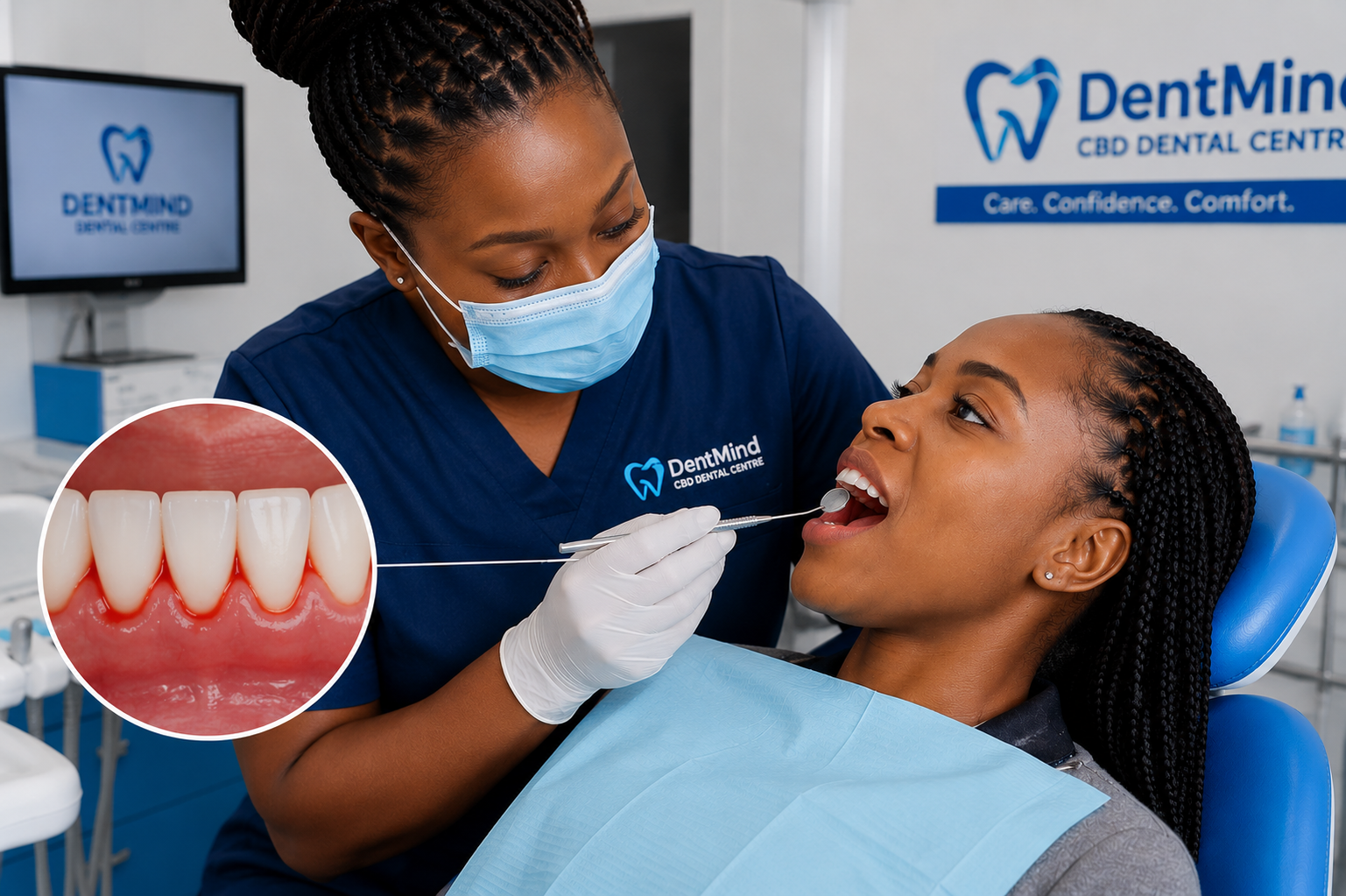
At DentMind CBD Dental Centre on Kimathi Street, periodontal problems are among the most common things we see and treat. Understanding what gum disease actually is, and what to look for, can make a real difference to your long-term dental health.
What Gum Disease Actually Is
Gum disease is an infection of the tissues that hold your teeth in place. It begins with gingivitis, which is inflammation of the gums caused by a build-up of bacterial plaque along the gumline. At this stage the gums become red, swollen, and bleed easily when brushed. The important thing about gingivitis is that it is fully reversible. With proper cleaning and professional treatment, the gums can return to normal.
If gingivitis is left untreated, it can progress to periodontitis. At this stage, the infection spreads below the gumline and begins to damage the bone and connective tissue that support the teeth. Unlike gingivitis, the bone lost to periodontitis does not grow back.² Periodontitis is the leading cause of tooth loss in adults worldwide, and severe periodontitis affects an estimated 11% of the global population.²
The Symptoms Worth Paying Attention To
The most common early sign of gum disease is bleeding when you brush or floss. Many people dismiss this as brushing too hard or using the wrong toothbrush. In healthy gums, bleeding should not occur. If your gums bleed regularly, even occasionally, it is worth having them assessed.
Research tracking patient experiences across the gum health spectrum found that bleeding was the most frequently reported symptom, though concern varied widely. Most people recognised it as a sign something was not right but still waited before seeking help, often for months or longer.¹
Other symptoms to be aware of include gums that look red or swollen rather than pale pink and firm. Bad breath that persists despite brushing is another common indicator, particularly in more advanced cases, where it can affect confidence in social and professional settings.¹ Gum recession, where the gumline appears to be pulling away from the teeth, suggests the disease has progressed. Loose teeth or teeth that have shifted position are signs of significant bone loss and require urgent attention.

Why So Many People Miss It
Part of the challenge with gum disease is that it rarely hurts in the early stages. A survey of dental patients found that nearly one third reported never experiencing gum bleeding after brushing, even when clinical examination showed active disease was present.² Pain, when it does occur, tends to come later and is often described as discomfort rather than sharp pain.
The gradual nature of the condition also makes it easy to adapt to. People change what they eat, avoid chewing on one side, or stop flossing the areas that bleed, without realising these adjustments are signs that something needs treatment.¹
What Gum Disease Does Beyond Your Mouth
This is the part that surprises most patients. Gum disease has well-established links to a number of systemic health conditions, including diabetes, cardiovascular disease, and Alzheimer’s disease.² The inflammation associated with periodontitis does not stay local. It can contribute to systemic inflammation that affects other parts of the body. Yet research shows that fewer than 20% of patients are aware of any connection between their gum health and their general health.²
This is why treating gum disease is not just about saving teeth. It is part of looking after your overall health.

What Happens When You Come In
At DentMind CBD, a periodontal assessment involves examining the gums, measuring pocket depths around each tooth, and checking for any bone changes on X-ray. From there, your dentist will recommend the right level of treatment, which may range from a professional clean and oral hygiene instruction for early-stage gingivitis, to a deeper cleaning procedure called root planing for more established disease.
Most cases of gum disease, when caught in time, respond well to treatment. What does not work is waiting.
If you have noticed any bleeding, bad breath that does not clear up, or gums that look different from how they used to, the team at DentMind CBD Dental Centre on Kimathi Street is ready to help. We are open seven days a week and offer same-day appointments for concerns like these. Call us on 0715 063640 or walk into Victor House, Third Floor, Kimathi Street, Nairobi CBD. The earlier you come in, the more we can do.
¹ Broomhead, T., Gibson, B., Parkinson, C. R., Vettore, M. V., & Baker, S. R. (2022). Gum health and quality of life: Subjective experiences from across the gum health-disease continuum in adults. BMC Oral Health, 22, 512. https://doi.org/10.1186/s12903-022-02507-5
² Rana, H., Warnes, B., Davies, M., & West, N. X. (2023). Patient-reported understanding and dentist-reported management of periodontal diseases: Do you know what gum disease is? British Dental Journal, 235(2), 127–131. https://doi.org/10.1038/s41415-023-6055-7