

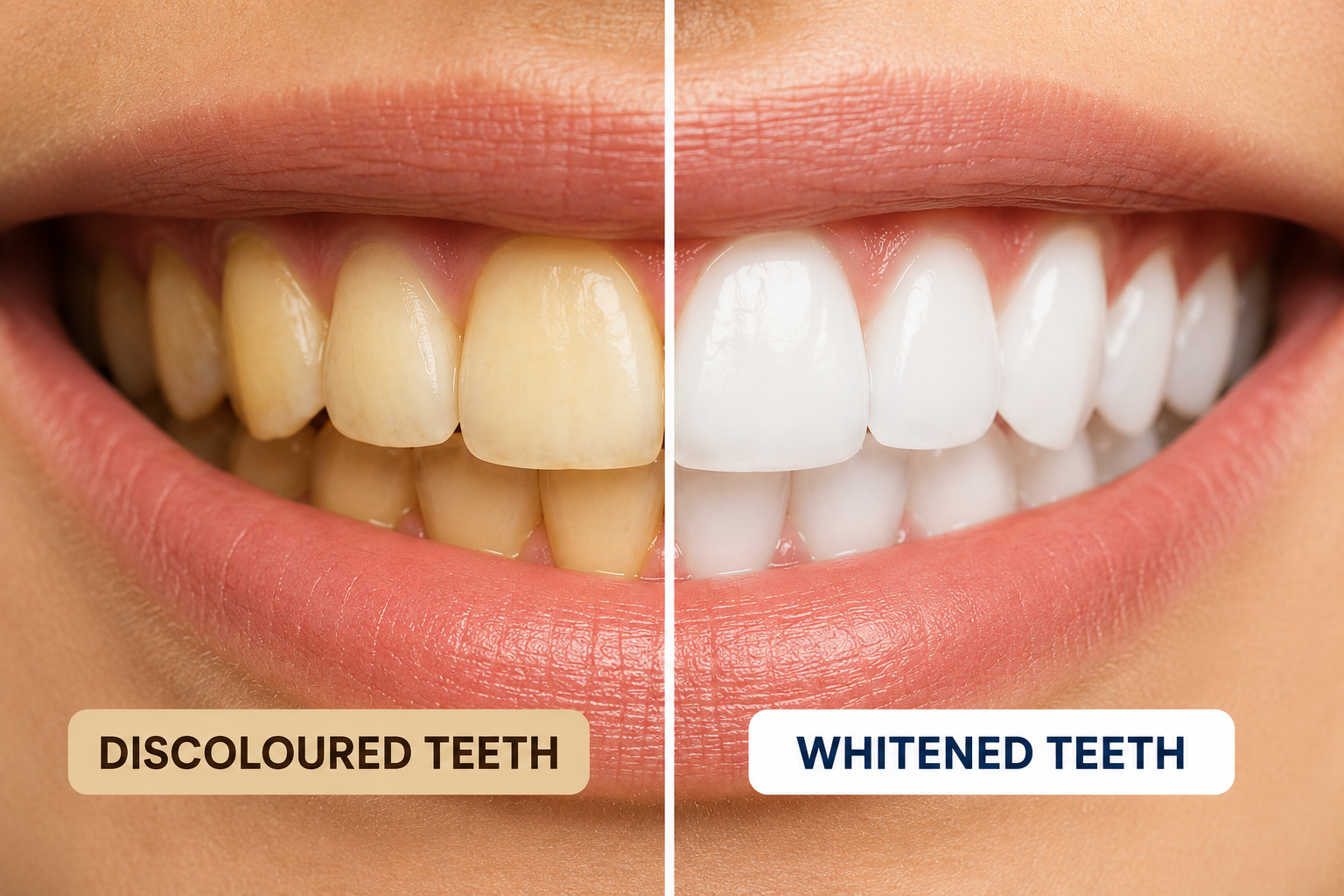
You brush every morning. You floss regularly. You even cut back on the sugary drinks. So why do your teeth still look yellow when you smile in the mirror?
You are not alone. Tooth discoloration is one of the most common concerns that patients bring up during visits to DentMind CBD Dental Centre in Nairobi CBD. The good news is that in many cases, yellow teeth are treatable. The first step is understanding what is actually causing the discoloration in the first place.
Two Types of Tooth Discoloration You Should Know
Before jumping to solutions, it helps to understand that not all tooth discoloration works the same way. Dentists generally classify staining into two categories: extrinsic and intrinsic.
Extrinsic staining sits on the outer surface of the enamel. It is caused by things your teeth come into contact with regularly, which makes it the more manageable type to deal with. Intrinsic staining, on the other hand, originates from within the tooth structure itself and tends to be more complex to treat.¹
What Causes Extrinsic Yellow Stains
Most yellow teeth in Nairobi patients come down to lifestyle habits and diet. Here are the most common culprits:
Coffee and tea are two of the biggest offenders. Both contain tannins, which bind to the enamel surface and leave a yellowish or brownish film over time. Given how much tea is consumed daily across Kenya, this is something many patients do not immediately connect to their tooth colour.
Red wine, dark juices, and sodas work in a similar way. Even certain vegetables like beetroot and turmeric, which are common in many Kenyan dishes, can contribute to surface staining over time.¹
Smoking is another major cause. Nicotine and tar from cigarettes deposit onto the enamel surface and create stubborn yellow to brown staining. If the habit continues unchecked, what starts as an extrinsic stain can gradually work its way deeper into the tooth, making it much harder to remove.¹
Some dental fillings can also accumulate surface stains due to the texture of the filling material. A routine polish during your dental cleaning appointment at DentMind CBD can usually sort this out.
What Causes Intrinsic Discoloration
Intrinsic staining is more involved because the discolouration originates inside the tooth rather than on its surface. Some of the known causes include:
Certain antibiotics, particularly tetracycline, when taken by a mother during pregnancy can affect the developing teeth of the unborn child. This type of discoloration often presents as grey or brownish bands across the teeth and is one of the more difficult forms to reverse.¹
Trauma to a tooth, such as a knock or fall, can trigger internal bleeding within the tooth structure. This causes a reddish or brownish discoloration that may develop gradually after the injury.¹ ²
Excessive fluoride during early childhood, a condition known as dental fluorosis, can also cause white spots or brown patches to appear on the enamel as teeth develop.²
Age is another factor that many people overlook. As you get older, the outer enamel layer gradually thins, allowing the naturally yellow dentine beneath to show through more prominently. This is a normal part of ageing but can be managed with the right treatment approach.

What You Can Do About Yellow Teeth
The right solution depends entirely on the type and cause of the discoloration. Here is a practical breakdown:
For extrinsic stains, a professional cleaning and polish at DentMind CBD is often the best starting point. This removes surface deposits that regular brushing cannot shift. Brushing or rinsing with water within 30 minutes of consuming staining foods or drinks also helps slow down surface buildup between appointments.¹
If you enjoy coffee, tea, or juices regularly, drinking through a straw where possible reduces direct contact with the teeth.
Professional teeth whitening is a very effective option for surface stains. However, it is important to have a dentist assess your teeth before starting any whitening treatment. Whitening products work through hydrogen peroxide or carbamide peroxide, which can cause sensitivity or damage if used without guidance, especially if there are untreated cavities.¹
For intrinsic discoloration, options such as dental veneers, crowns, or in-office treatments may be recommended depending on the severity. These are best discussed with your dentist directly, as no two cases are exactly alike.
When to See a Dentist in Nairobi CBD
If your teeth have changed colour suddenly, or if the discoloration is accompanied by sensitivity, pain, or swelling, do not wait. A sudden change in tooth colour can sometimes signal an underlying issue that needs prompt attention.²
Even if you are not experiencing any discomfort, a routine check at DentMind CBD Dental Centre will give you a clear picture of what is going on and what your options are.

Book an Appointment at DentMind CBD
Whether your concern is surface staining from tea and coffee or something that has been bothering you for years, our team is here to help. DentMind CBD Dental Centre is open seven days a week at Victor House on Kimathi Street in Nairobi CBD.
DentMind CBD Dental Centre
Victor House, Third Floor
Kimathi Street, Nairobi CBD
0715 063640
www.dentmindcbd.co.ke
FOOTNOTES:
¹ Babakhanov, A. (2019). Teeth staining prevention and treatment. The Dental Assistant, 88(1), 9.
² Patel, R., & colleagues. (2024). Tooth discoloration: Causes and clinical presentation — Part I. Journal of Oral Health and Community Dentistry, 18(2). https://doi.org/10.5005/jp-journals-10062-0187

