

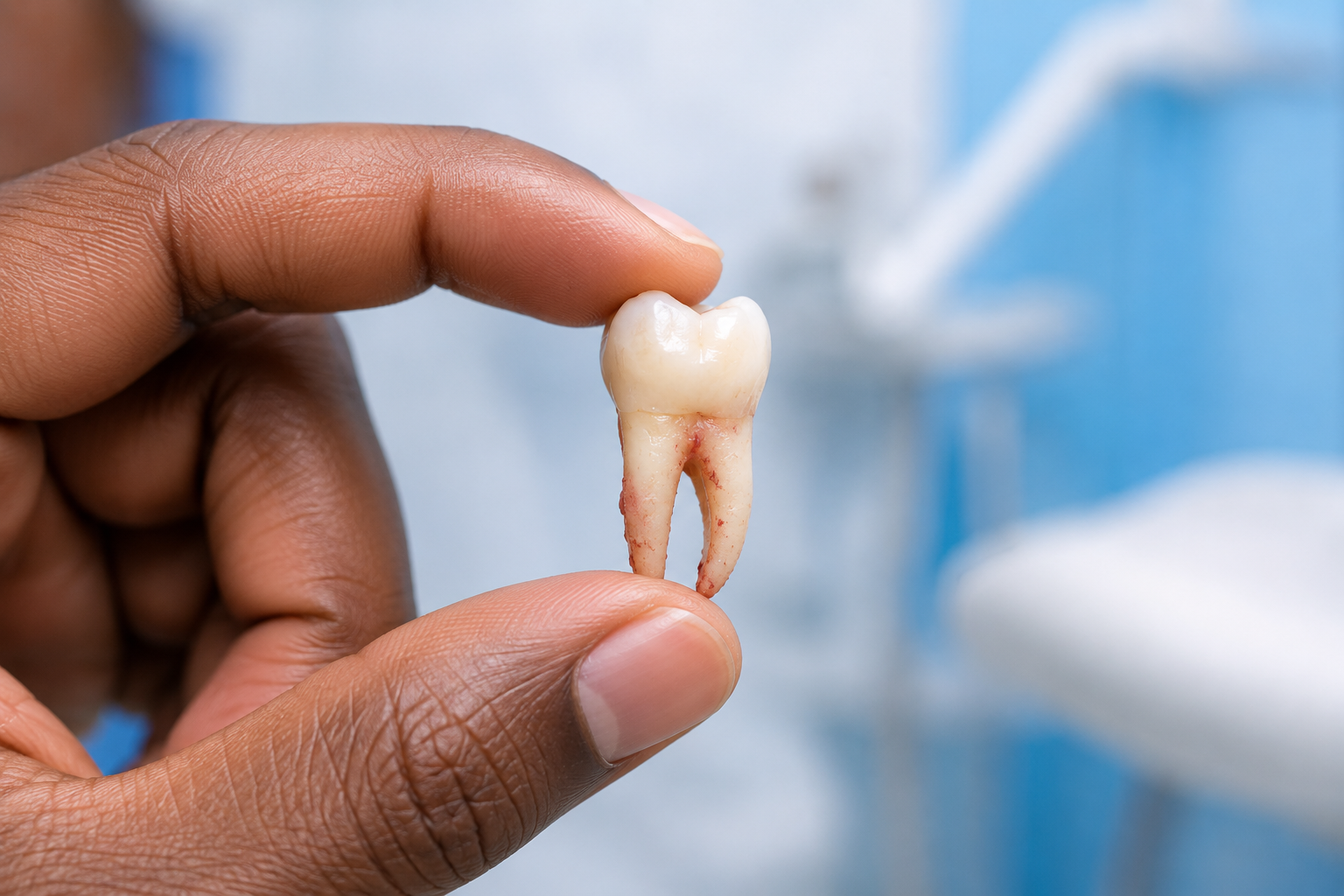
A knocked out tooth is one of those situations where the clock starts the moment it happens. What you do in the minutes immediately after the injury can make the difference between saving the tooth and losing it permanently. If you or someone near you has just had a tooth completely knocked out, here is what you need to know right now.
What Does “Knocked Out” Actually Mean?
When a tooth is completely displaced from its socket due to a fall, collision, or impact, dentists refer to it as an avulsion injury. It is one of the most serious dental emergencies a person can experience. The good news is that in many cases, a knocked out permanent tooth can be saved if the right steps are taken quickly and the patient reaches a dentist in time.¹
It is worth noting that this applies to permanent teeth only. Baby teeth should not be replanted, as doing so can interfere with the development of the adult teeth beneath. If your child has lost a baby tooth due to trauma, take them to see a dentist but do not attempt to put the tooth back.
Step One: Find the Tooth and Handle it Correctly
The first thing to do is locate the tooth. Pick it up by the crown, which is the white part you normally see when someone smiles. Do not touch the root. The root surface is covered in periodontal ligament cells that are critical to successful replantation. Once those cells dry out or are damaged, the chances of the tooth surviving drop significantly.¹
Do not scrub the tooth, wrap it in tissue, or store it dry. All of these things will damage or kill the ligament cells on the root surface.
Step Two: Replant Immediately if You Can
If the person is conscious, calm, and the tooth is clean, the best thing to do is gently reinsert it into the socket straight away. Rinse the tooth briefly with clean water or milk if it is visibly dirty, then slide it back into the socket in the correct direction and have the patient bite gently on a clean cloth to hold it in place.
Do not force it. If it does not go back in easily, do not push. Move to the next step.
Step Three: If You Cannot Replant, Store the Tooth Correctly
The tooth must be kept moist at all times. The storage medium you use matters enormously for the survival of those root surface cells.
Milk is the best widely available option. Plain cold milk, whether full cream or skimmed, provides a suitable environment to keep the periodontal ligament cells alive long enough to get to a dentist.¹
If milk is not available, you can tuck the tooth between the patient’s gum and cheek. Saliva is also a reasonable short-term storage medium. Water is a last resort as it is not ideal for cell survival over time, but it is better than leaving the tooth dry.
Do not store the tooth in tissue paper, cotton wool, or any dry material.

Step Four: Get to a Dentist Immediately
Time is the most critical factor in saving a knocked out tooth. The sooner the tooth is replanted and stabilised by a dentist, the better the outcome.¹ Ideally, you want to be in the dental chair within 30 minutes of the injury. Beyond 60 minutes, the prognosis for the tooth becomes considerably poorer, though it is still worth attempting replantation even after this window.
At DentMind CBD Dental Centre on Kimathi Street, we are open seven days a week and see dental emergencies on the same day. Call us as you are on your way so we can prepare for your arrival.
What Will the Dentist Do?
Once you arrive at the clinic, the dentist will clean the tooth and socket carefully, reposition the tooth, and stabilise it using a flexible splint attached to the neighbouring teeth. This splint is typically kept in place for a short period while the surrounding ligament begins to heal.
Depending on the age of the patient and the condition of the tooth, root canal treatment may be needed either at the time of replantation or in the weeks that follow. The dentist will also assess whether antibiotics or a mouthwash are appropriate as part of the aftercare.¹
Follow-up appointments are essential after a tooth has been replanted. The healing process takes time and needs to be monitored carefully through clinical examination and X-rays.
What If the Tooth Cannot Be Saved?
In some cases, particularly where there has been a significant delay or the tooth has been stored incorrectly, replantation may not be possible or may ultimately fail. In those situations, your dentist at DentMind CBD will discuss your options for replacing the tooth, which may include a dental implant, a bridge, or a removable option depending on your age, dental history, and treatment goals.
Losing a front tooth has real consequences beyond appearance. Research has shown that missing anterior teeth can affect a person’s self-confidence, social interactions, and overall quality of life, particularly in younger patients.¹ Prompt action gives the best chance of avoiding that outcome altogether.
Quick Reference: What to Do
If a permanent tooth gets knocked out, remember the following in order:
Pick up the tooth by the crown, not the root. Rinse gently if dirty. Replant immediately if possible. If not, store in cold milk. Get to a dentist within 30 minutes. Call DentMind CBD on 0715 063640 as you travel.

Book Emergency Dental Care at DentMind CBD
DentMind CBD Dental Centre is open seven days a week at Victor House, Third Floor, Kimathi Street in Nairobi CBD. We handle dental emergencies on the same day. If you have a knocked out tooth, do not wait.
DentMind CBD Dental Care
Victor House, Third Floor
Kimathi Street, Nairobi CBD
0715 063640
www.dentmindcbd.co.ke
FOOTNOTES:
¹ Day, P. F., Duggal, M., & Nazzal, H. (2019). Interventions for treating traumatised permanent front teeth: avulsed (knocked out) and replanted. Cochrane Database of Systematic Reviews, (2). https://doi.org/10.1002/14651858.CD006542.pub3
² Horisk, K., & Gartshore, L. (2020). Technique tips: Replantation and stabilization of avulsed permanent teeth. Dental Update, 47(5). https://doi.org/10.12968/denu.2020.47.5.456

