

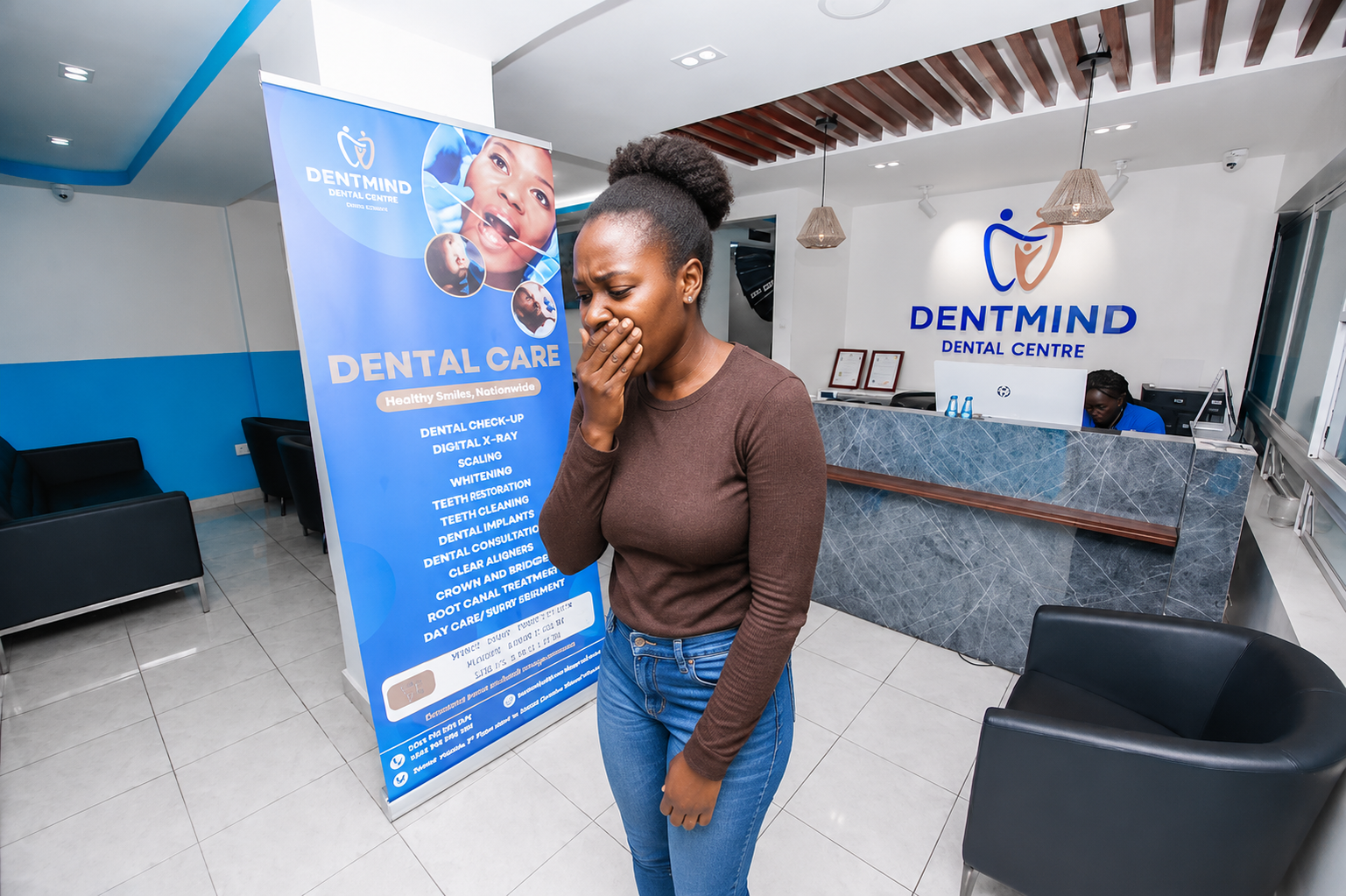
Bad breath, clinically known as halitosis, is one of the most common yet least talked about dental problems. Many people suffer in silence, either unaware of it or too embarrassed to seek help. If you have been wondering what is causing your bad breath and what you can actually do about it, this guide breaks it all down.
How Common Is Bad Breath?
More common than most people realise. Research estimates that halitosis affects anywhere between a quarter and half of the adult population globally, making it the third most frequent reason people visit a dentist, after tooth decay and gum disease.¹ Studies across Africa report self-perceived prevalence rates as high as 50% in some populations, suggesting it is a significant oral health concern on the continent as well.¹
What Actually Causes Bad Breath?
The mouth is responsible for roughly 90% of cases.¹ The primary culprit is a group of gases called volatile sulphur compounds (VSCs), produced when bacteria in the mouth break down food particles, dead cells, and debris. These bacteria thrive in low-oxygen environments, particularly at the back of the tongue, between teeth, and in gum pockets.
Research on breath composition has shown that VSCs, along with other compounds like butyric acid and hydrogen sulphide, are the key chemical markers associated with halitosis.² Scientific studies using breath analysis technology have confirmed that the pattern of gases in exhaled breath can reliably indicate both the presence and the underlying cause of bad breath.²
The most common oral causes include:
Poor oral hygiene. When teeth are not brushed and flossed regularly, food debris accumulates and bacteria flourish.¹
Gum disease. Periodontitis creates deep pockets around the teeth where bacteria multiply and produce odour.¹
Tongue coating. The back of the tongue is one of the most concentrated sources of odour-causing bacteria. A white or yellowish coating is a common sign.¹
Dry mouth. Saliva plays a critical role in washing away bacteria and neutralising acids. When saliva flow is reduced, whether from medication, breathing through the mouth, or dehydration, bacteria levels rise and bad breath follows.¹
Tooth decay and old restorations. Cavities and poorly fitted crowns or fillings harbour bacteria and contribute to persistent odour.¹
Beyond the mouth, a smaller proportion of cases involve conditions outside the oral cavity. These include sinus infections, chronic respiratory conditions, acid reflux, and in some cases systemic diseases such as diabetes, kidney disease, or liver conditions.¹ In people with uncontrolled diabetes for example, a distinctive fruity or acetone-like breath can occur due to the accumulation of ketone bodies in the bloodstream.² In kidney failure, the breath often takes on an ammonia-like quality due to the buildup of urea.²
Diet and lifestyle also play a role. Foods like garlic and onions, smoking, alcohol, stress, and even hormonal changes can all contribute to transient or persistent bad breath.¹

What You Can Do at Home
Good oral hygiene is the foundation. Brush twice a day using a soft-bristled toothbrush, paying attention to the gum line. Floss at least once daily to clean between the teeth where the brush cannot reach. Clean your tongue, particularly the back third, using a tongue scraper or the reverse side of your toothbrush.¹
Stay well hydrated throughout the day. Avoid excessive coffee, alcohol, and sugary drinks, all of which promote bacterial growth and reduce saliva flow.
When Home Care Is Not Enough
If your bad breath persists despite good oral hygiene, it is a signal that something more is going on. Gum disease, decay, or a systemic issue may be the underlying cause. In those cases, professional treatment is the only effective solution.
At DentMind CBD Dental Centre, a proper assessment will identify exactly where your bad breath is coming from, whether it is your gums, tongue, teeth, or something beyond the mouth, and guide you toward the right treatment.

Book a Bad Breath Assessment at DentMind CBD
You do not have to live with bad breath. DentMind CBD Dental Centre is located at Victor House, Kimathi Street, Nairobi CBD and is open Monday to Saturday 8AM to 6PM and Sunday 9AM to 3PM.
DentMind CBD Dental Centre
Victor House, Third Floor
Kimathi Street, Nairobi CBD
0715 063640
www.dentmindcbd.co.ke
NOTES
¹ Muoka, C. G. (2023). The Science of Bad Breath: Examining Halitosis Commonness and its Diverse Causes. Academia.edu. pp. 1-9.
² Sharma, A., Kumar, R., & Varadwaj, P. (2023). Smelling the Disease: Diagnostic Potential of Breath Analysis. Molecular Diagnosis & Therapy, 27, 321-347. https://doi.org/10.1007/s40291-023-00640-7

